Gentrification and Rising Rents May Worsen Black Residents’ Views of Whites as a Group
Clayton Becker (UCLA)
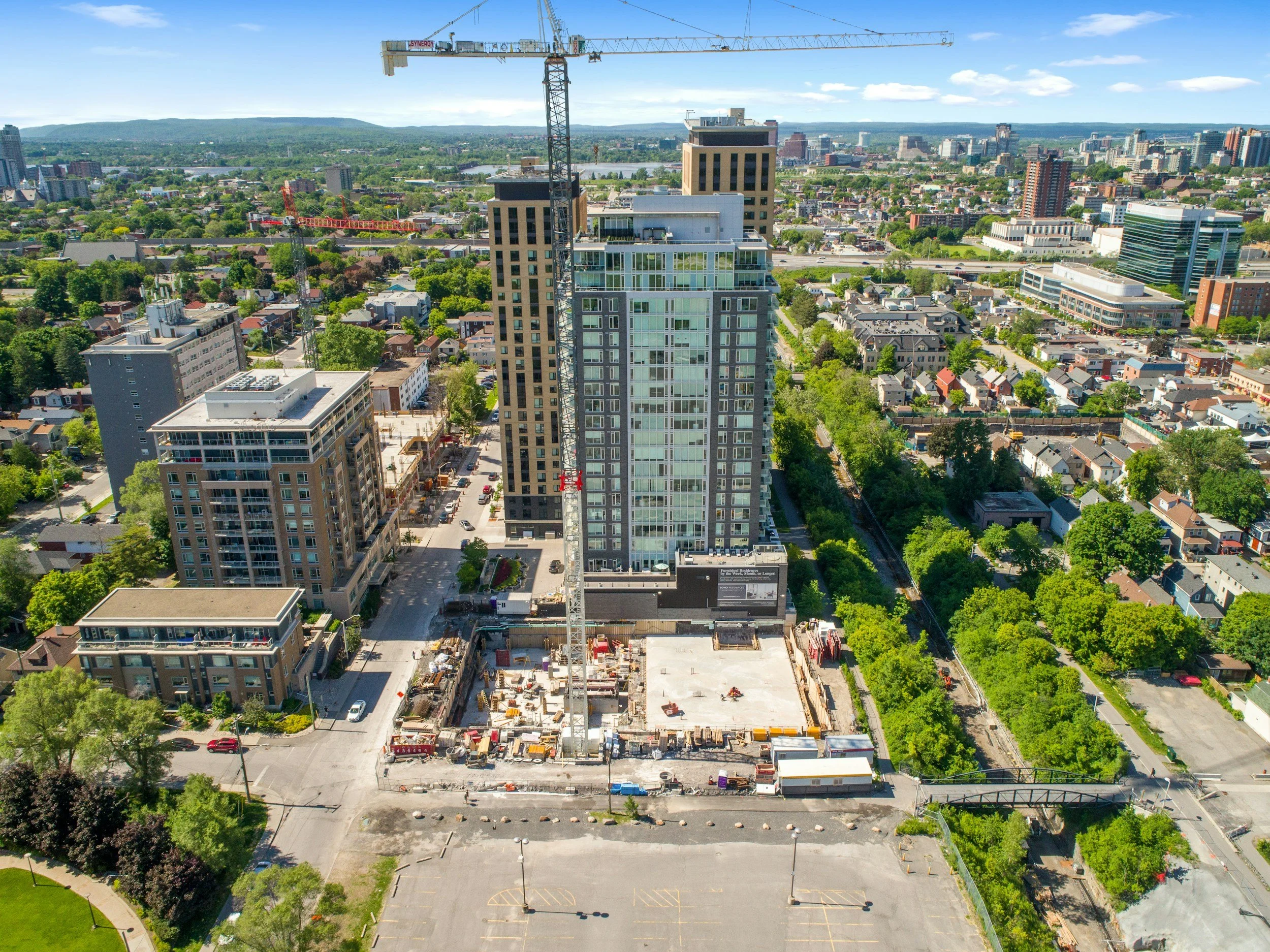
America's housing crisis has reshaped cities in profound ways. As rents have skyrocketed and affordable neighborhoods have become harder to find, higher-income residents have increasingly begun moving into historically lower-income, predominantly Black neighborhoods. This process, gentrification, has generated enormous debate about displacement, neighborhood change, and racial dynamics. But one question has received surprisingly little attention: how does gentrification affect the way Black residents feel about the racial groups moving into their neighborhoods?
In one of the first studies to examine the impact of gentrification on attitudes I investigate this question and offer some answers – though they are more nuanced than you might expect.
To answer this question, I merged three data sources: nearly 500,000 survey responses from the Democracy Fund + UCLA Nationscape Survey, collected between 2019 and 2021; ZIP code-level demographic and economic data from the 2015 and 2022 American Community Surveys; and an original dataset of over 500,000 restaurant prices and ratings scraped from Google Maps (which I used as a proxy for cultural changes in neighborhoods). I focused specifically on Black respondents living in ZIP codes with substantial Black populations and tracked how changes in neighborhood demographics and rents were associated with their feelings toward White, Latino, and Asian people at the group level.
Headline Results
In plain terms: Black residents living in gentrifying neighborhoods do not develop negative feelings toward the racial group of newcomers simply because those newcomers are present. Demographic change alone doesn't move the needle much. What matters is the combination of who is moving in and whether rents are rising at the same time.
Specifically, when White residents move into predominantly Black neighborhoods and rents rise substantially alongside that in-migration, Black residents’ views of White people as a group become more negative. In areas where White newcomers move into a predominantly Black neighborhood and rents stay stable, or even fall slightly, views of White folks among Black residents may improve. There do not appear to be similar effects for Asian and Latino newcomers.
Figure 1 below helps to explain this finding in more detail. When White residents move into a neighborhood but rents stay relatively stable, Black residents’ views of Whites are, if anything, slightly more favorable. This is consistent with the idea that sustained intergroup contact under stable conditions can reduce prejudice. But when rent increases accompany White in-migration, that positive association erodes and eventually flips negative. The economic pressure appears to be what turns demographic change into attitudinal change.
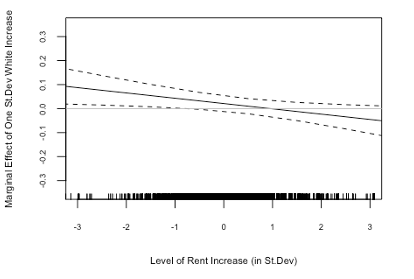
Figure 1: The Impact of White In-Migration Changes Depending on Rent Increases
I should be clear that I am not directly measuring change in people’s views here. Nationscape did not survey people in 2015 and then re-interview them years later, but I believe that change is a more likely explanation than some pre-existing difference in the attitudes of neighborhood residents.
With that in mind, it is somewhat remarkable that these differences are observable at all. A substantial amount of previous research suggests that the racial attitudes of adults (all respondents here are adults) are relatively firmly set. They are what Michael Tesler has called crystallized. In other words, if the impact of gentrification and rent increases on attitudes was limited, we would not be able to see them at all, despite the large sample size. To put the size of this effect in perspective: in the neighborhoods experiencing the most intense gentrification, the shift in how Black residents feel about White people as a group is more than half as large as the attitudinal difference between a Black individual who calls themselves very liberal and one who calls themselves very conservative.
What This Is Not Saying
It is also worth being clear about what these findings do not mean. Perhaps most importantly, they do not show that Black residents are hostile toward newcomers generally. In fact, average favorability ratings toward all groups remain positive, if less so, even under gentrification pressure. They do not show that gentrification inevitably poisons interracial relations. And they do not show that Latino or Asian-led gentrification is consequence-free, only that its attitudinal effects on Black residents appear to differ from White-led gentrification.
Implications
The clearest takeaway for policymakers is this: the economic dimensions of gentrification – dynamics such as rising rents, displacement pressure, housing insecurity, and more – are not just material harms. They may also reshape how communities relate to one another across racial lines. Addressing housing affordability is not only about keeping people housed. It is also about preserving the social fabric of integrating neighborhoods. If cities continue to fail to produce enough housing to stabilize rental prices, my results suggest that Black-White relations in gentrifying neighborhoods may continue to deteriorate.
The good news: Black residents are not reacting to demographic change alone. They are reacting to a specific combination of demographic and economic change. That means there is a version of neighborhood integration that does not come at the price of incumbent residents’ economic security. That plausibility of that version depends on the choices that policymakers make.
Clayton Becker is a PhD candidate at UCLA. His research utilizes administrative data, surveys, experiments, and a variety of computational methods and primarily focuses on local politics, the public input process, and the politics of housing.