Which Neighborhoods Have Farmers’ Markets?
How Neighborhood Conditions Shape Food Access
James C. Wo (University of Iowa)
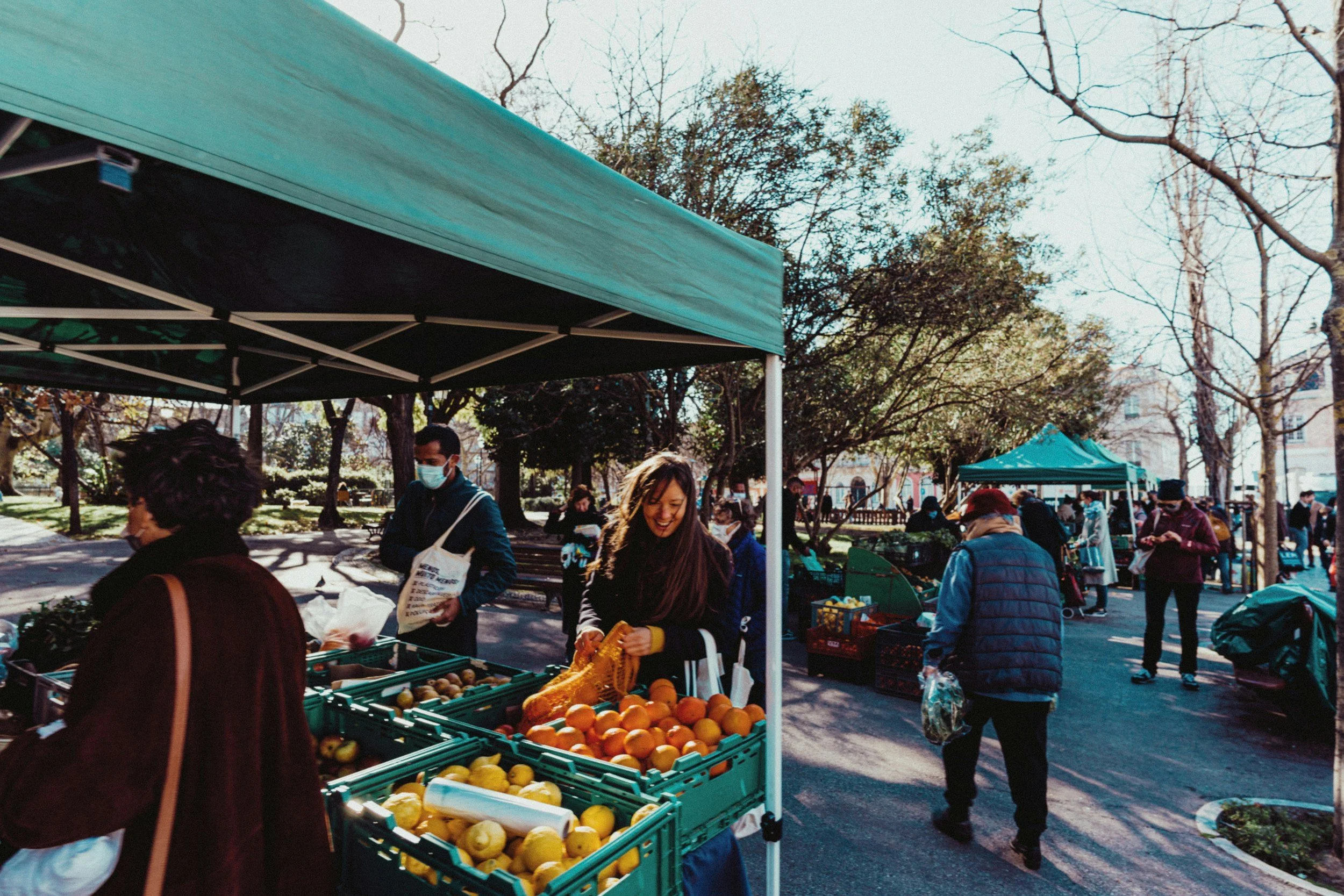
Farmers’ markets offer valuable resources not only to the people who shop at them, but also to the broader communities in which they are situated. They are an important source of fresh and sustainable produce, often surpassing the quality of food available at traditional grocery stores, and they frequently operate as gathering places that facilitate social interaction and cohesion.
This raises a basic and surprisingly underexplored question: Which neighborhoods actually have farmers’ markets, and why?
Moving beyond who shops at farmers’ markets
Most research on farmers’ markets has focused on people, particularly on the characteristics that distinguish patrons of farmers’ markets from those who do not use them. A robust body of work has shown that patrons tend to be White, relatively young, highly educated, and financially well-off. This research has been important for understanding who benefits from farmers’ markets once they exist.
What remains less clear is whether these same characteristics shape where farmers’ markets are located. Just because patrons tend to be socioeconomically advantaged does not necessarily mean that farmers’ markets are systematically located in advantaged neighborhoods.
Shifting the focus from people to neighborhoods
In this study, I focus on the spatial distribution and availability of farmers’ markets, rather than on the factors that motivate people to patronize them. Using neighborhoods in Los Angeles County as a case study, I examine whether farmers’ markets are more likely to be found in certain types of neighborhoods, and why.
Los Angeles County offers a useful setting for this analysis given its size, demographic diversity, and wide variation in neighborhood conditions and land use. While the analysis is not nationally representative, it allows for a rigorous assessment of how farmers’ market presence reflects neighborhood sociodemographic characteristics, features of the built environment, and their intersection within a single metropolitan area.
What descriptive patterns suggest
At first glance, the descriptive statistics point toward familiar concerns about inequality. Neighborhoods with farmers’ markets differ in meaningful ways from those without them, suggesting spatial inequalities in access. On average, neighborhoods with markets tend to be more affluent, more educated, and more mixed in terms of land use.
Viewed alone, these patterns could easily be interpreted as evidence that farmers’ markets are another amenity concentrated in socioeconomically advantaged neighborhoods. Had I relied only on these comparisons, I would have concluded that farmers’ markets largely reflect systemic spatial inequalities.
What the regression models reveal
Once I account for multiple neighborhood characteristics simultaneously, a more nuanced story emerges. The regression models testing for main effects show little evidence that farmers’ market presence is systematically structured by race or socioeconomic status alone. With the exception of educational attainment, measures of neighborhood racial composition and socioeconomic disadvantage are not statistically significant predictors of whether a farmers’ market is present.
This finding does not deny the extensive evidence documenting spatial inequalities in municipal resources, public facilities, housing, and community organizations. Rather, it suggests that farmers’ markets in Los Angeles County are not uniformly absent from underserved communities of color once other neighborhood features are taken into account.
Instead, the strongest and most consistent predictors of farmers’ market presence are characteristics of the built environment. Markets are more likely to be located in neighborhoods that are centralized and characterized by a diverse mix of residential and commercial land uses. In particular, measures of mixed land use show substantively meaningful associations with market presence.
Taken together, these results align with a spatial optimization perspective, which emphasizes the tendency for amenities to cluster in areas that are accessible, walkable, economically vibrant, and socially active. Once established, farmers’ markets further reinforce these dynamics by enhancing the diversity and quality of local economic services and serving as gathering places that foster social ties among residents and nonresidents alike.
Where inequality re-enters the picture
At the same time, the analysis does not suggest an absence of spatial inequality altogether. When I examine how neighborhood characteristics interact, a more contextual pattern of inequality becomes visible.
The positive association between mixed land use and farmers’ market presence is strongest in both high-income and highly educated neighborhoods. In contrast, increases in mixed land use in lower income or lower education neighborhoods show no meaningful relationship with market presence, and these neighborhoods exhibit some of the lowest odds of hosting a farmers’ market.
Importantly, these conclusions depend on how the data are analyzed. Only by combining descriptive statistics, main effects models, and moderation analyses does a more complete picture emerge, one that points to contextual rather than systemic inequalities across space.
Policy considerations
These findings offer several policy considerations for improving food access equity. First, municipalities should consider supporting farmers’ markets in predominantly residential, lower income neighborhoods. Because vendors and organizers often perceive these areas as less favorable business environments, planners and policymakers could mitigate financial risk through tax incentives, rental subsidies, and city-funded infrastructure.
Second, municipalities should invest in food education capacity in lower education neighborhoods. Partnerships with schools, churches, hospitals, and recreation centers could help build food literacy and increase demand for fresh and sustainable produce. Over time, stronger demand may help markets overcome the challenges associated with establishing operations in new areas.
Finally, because farmers’ market presence is strongly associated with mixed land use, planners should consider expanding mixed-use opportunities in predominantly single-use residential neighborhoods. This could involve easing zoning restrictions to allow markets in parks, vacant lots, school grounds, or other underutilized spaces.
Looking ahead
This study focuses on whether farmers’ markets are present in neighborhoods, not on what those markets look like or how people experience them once they arrive. Not all farmers’ markets are the same, and availability alone does not guarantee that residents feel welcome or able to participate. These limitations suggest that future work should pay closer attention to how farmers’ markets function as inclusive spaces for different communities.
James C. Wo is an associate professor in the Department of Sociology and Criminology at the University of Iowa.