Community Wealth Building in Scotland
A Health Impact Assessment
Fiona Scott (NHS Tayside), Gerard McCartney (University of Glasgow), Neil McInroy (The Democracy Collaborative), and Margaret Douglas (University of Glasgow)
Introduction
Economic policy and activity are key determinants of health and health inequalities. They shape the conditions in which people are born, grow, live, work, and age, as well as the distribution of income and wealth across society (McCartney et al. 2019; WHO 2024). Economic policy and development activity can improve population health through income, employment status, and job quality (Naik et al. 2020). However, it is increasingly recognized that traditional extractive models of economic growth and the resultant patterns of wealth do not deliver prosperity for all (Mazzucato et al. 2022).
In this context Scotland has adopted a “Wellbeing Economy” approach as a new economic system that prioritizes human and planetary needs rather than economic growth (WEAll n.d.). This recognizes that accelerating economic growth has adverse consequences including ecological crises and inequalities (Hensher et al. 2024), without necessarily improving health (Brook et al. 2024). Community Wealth Building (CWB) has been proposed as a means to realize a wellbeing economy in Scotland (Scottish Government 2022c) and as such positively improve health impacts. In February 2026 the Scottish Parliament passed the Community Wealth Building (Scotland) Bill which will place legal duties to embed CWB in public sector bodies in Scotland.
Only one published study to date has investigated health outcomes of CWB, finding positive impacts on mental health (Rose et al. 2023). Likely health impacts of CWB can also be considered through prospective health impact assessment (HIA). This involves identifying potential impacts of CWB on health determinants and pathways, then applying available evidence to assess their likelihood and importance in a defined context.
This paper reports on an HIA of the impacts of CWB in Scotland, to inform its development and implementation. The full HIA, completed in 2024, is reported elsewhere (Scott et al. 2024). Here, we will summarize the HIA approach and findings, then draw on these to critically consider the challenges and opportunities of adopting CWB as a practical way to implement a wellbeing economy.
Community wealth building (CWB)
CWB is defined by its originators - the Democracy Collaborative - as “an economic development model that transforms local economies based on communities having direct ownership and control of their assets. It challenges the failing approaches that have been widely accepted in economic development for too long, and addresses wealth inequality at its core” (The Democracy Collaborative n.d.). It aims to develop resilient and inclusive local economies where more wealth (including financial and fixed assets) is owned, retained, and recirculated for the benefit of local communities, rather than extracted to distant shareholders.
An important CWB mechanism is harnessing the economic power of “anchor institutions” (institutions rooted in communities with substantial economic and social impacts) (PHS 2024b). CWB is often implemented through five interlinked pillars (McKinley & McInroy 2023) which were adapted for application in Scotland (Table 1).
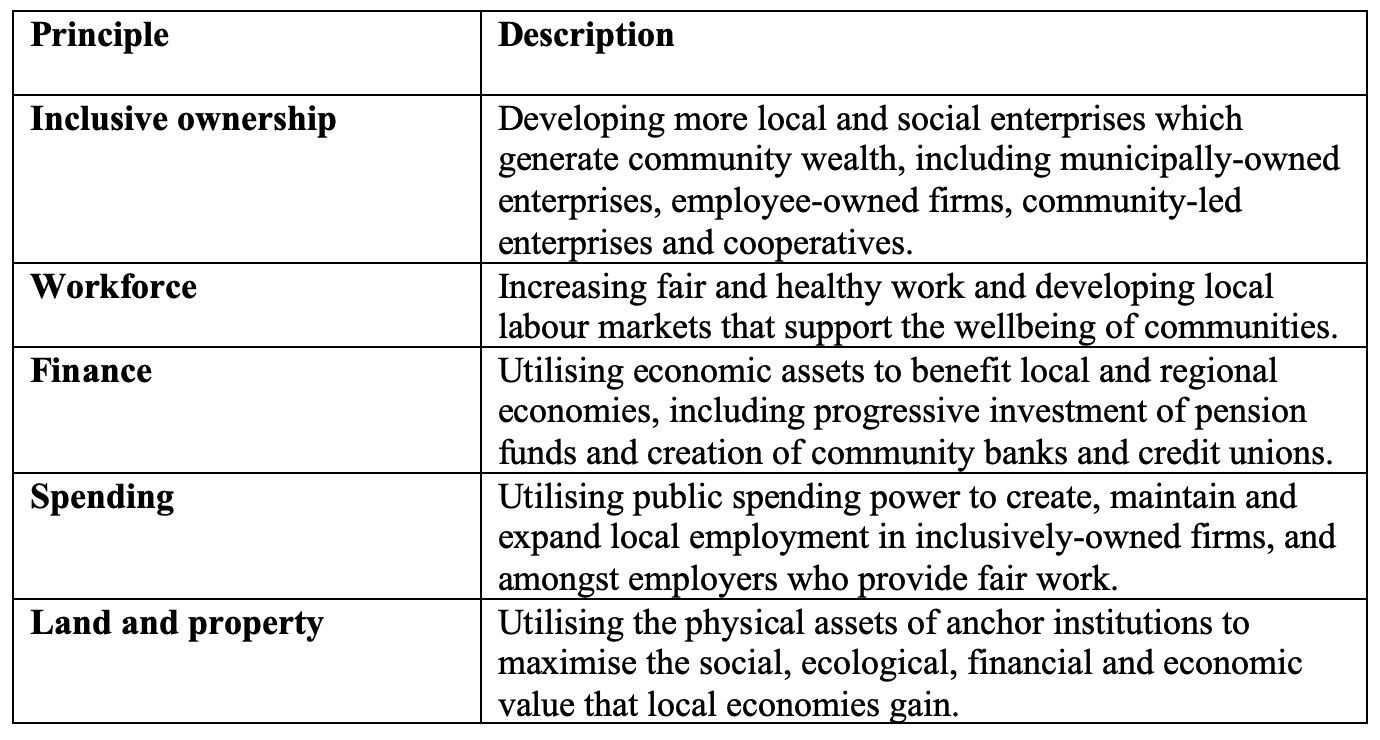
Table 1: The five pillars of CWB, used in Scotland
Materials and methods
The health impact assessment (HIA) was designed to explore how Community Wealth Building (CWB) could influence population health and health inequalities, and followed the established HIA steps (PHS 2024a). Initial screening discussions with Scottish Government colleagues confirmed the value of undertaking the HIA. Scoping included identifying potential impacts and the evidence needed to assess these. To identify potential impacts, a facilitated workshop was held with stakeholders from local authorities, NHS boards, academia, and government. Using a health impact checklist, participants identified possible health‑related effects across different groups and suggested early recommendations.
The appraisal step brought together three evidence sources: routine data, key informant interviews, and a rapid review of relevant literature. Routine publicly available data provided a baseline picture of Scotland’s health, income and wealth, and contextual information for each CWB pillar. Key informant interviews, conducted between January and March 2024, captured insights on progress, challenges and opportunities in implementing CWB, with thematic analysis of transcripts informing the assessment. The rapid review sought to identify evidence on how CWB or its individual pillars may affect health or wider determinants, drawing on existing systematic review work, supplemented searches, and gray literature.
Findings from all evidence sources were synthesized to assess likely impact pathways for each CWB pillar, linking intermediate outcomes to potential health effects. These pathways were summarized setting out the populations affected, and the scale and likelihood of impacts. A multi‑organization steering group reviewed and agreed the synthesis, shaping the final set of recommendations aimed at maximizing health and equity benefits and minimizing unintended harms in the implementation of Community Wealth Building.
Results
Health, income and wealth in Scotland
The data profile (PHS, 2024c) highlighted the significant, persistent inequalities in health, income and wealth in Scotland. Despite an average annual Gross Domestic Product (GDP) growth rate of 1.4% between 2000 and 2019 (Scottish Government 2022a), average life expectancy in Scotland stopped improving around 2012, and has declined in the most disadvantaged areas (NRS 2022; Walsh & McCartney 2023). People living in the poorest two-fifths of households are almost eight times as likely to report poor health as those in the richest fifth. Marked income and wealth inequalities exist, with the wealthiest 2% of households in Scotland holding 18% of all wealth (Scottish Government 2022b).
The profile also suggested that there is substantial scope to extend the scale of activity across all five CWB pillars (PHS 2024c). A 2022 mapping exercise found that just over half (53%) of local authorities in Scotland had at least some level of policy commitment to CWB (Moss 2023). Over a fifth, or 22%, of local authorities had a policy commitment covering the entire council and 31% had actions within one service or department.
Key informant perspectives
Twelve key informants were interviewed: seven from local authorities; two from the NHS; one from a housing association; one from a further education college; and one from an enterprise development agency. Analysis identified both opportunities and challenges relating to CWB implementation. All informants reported that elements of CWB had existed previously, but most reported that the policy drive towards CWB had linked workstreams, enhanced partnership working and strengthened organizational commitment. Challenges included resource constraints, anticipated long-timescales for change, and unclear outcome indicators. Informants also identified several potential health and inequalities impacts of developing a CWB approach, or of particular CWB pillars (Scott 2024). They recognized the potential for CWB to positively shape local economies, improve prospects for local people, and reduce inequalities. They identified several pathways to improved health and health inequalities.
Community wealth building (CWB) is valued for integrating different elements of local economic practice into a cohesive approach that generates greater impact than individual initiatives alone. Stakeholders felt energized by recognizing their own role as anchors, with CWB fostering a sense of organizational focus and empowerment. However, there remains uncertainty about how best to define and measure success. Reported impacts include stronger pathways into employment and improved working conditions through more comprehensive and collaborative efforts, greater benefits from local ownership of assets due to deeper local stewardship, and enhanced community cohesion and wellbeing through increased economic control. At the same time, community ownership can place significant demands on communities, creating a tension between empowerment and the pressures that come with managing assets.
Impacts and pathways
We found that the five CWB pillars are likely to impact health and inequalities through multiple interconnected and synergistic pathways. These are discussed briefly below; further details including the impacts matrix are available in the full HIA report (Scott et al. 2024).
Only one study evaluated the impact on a health outcome. This was a difference‑in‑difference study of CWB in Preston, England (Rose et al. 2023), which found improved mental health outcomes compared with matched control areas, alongside increased life satisfaction, higher median wages, and improved employment rates relative to a modeled counterfactual.
The pathways through which CWB is likely to influence health include:
● Reduced poverty, income and wealth inequality
● Increased employment and better working conditions
● Environmental impacts
● Widening economic participation and increasing personal sense of control
● Enhancing community cohesion and resilience
● Increasing demands on communities
Poverty and income and wealth inequality shape health through material and psychosocial mechanisms (Benzeval et al. 2014) and are fundamental causes of health inequalities (Richardson et al., 2023). CWB has been shown to raise incomes among low‑income groups and reduce wealth concentration (Sayer & McCartney, 2021), supported by initiatives such as financial inclusion programs (Oostra, 2022; The Centre for Community Research 2017) and credit-union partnerships (Alonso et al. 2023; Lawrence et al. 2024; Li & van Rijn 2024). Local procurement and ownership effects, where procurement directed to smaller local suppliers creates local multiplier benefits (Reed et al. 2019), and municipal or community ownership promotes wealth recirculation and wider social gains (DTAS n.d.; Hoffman 2013). There is good evidence of significant adverse health outcomes from unemployment (Roelfs et al. 2011), insecure employment (Burdorf et al. 2023), and poor working conditions (Frank et al. 2023). We found evidence that CWB can improve job access and job quality, particularly through SMEs, which create more jobs per firm size (de Kok et al. 2011; Quist 2019; Thompson 2014), and employee‑owned firms, which show better retention, satisfaction and wage equality (Blasi & Kruse 2019; Employee Ownership Association 2018; Employee Ownership Foundation n.d.; Lampel et al. 2010; United States Federation of Workers Cooperatives & Democracy at Work Institute 2019; WPI Economics 2023).
CWB can enhance physical and social environments by reducing vacant land, improving public spaces and strengthening local environments linked to better health and reduced inequalities (Mitchell & Popham 2008; Rojas‑Rueda et al. 2021). It can expand community access to assets (NHS GG&C 2023), and provide subsidized accommodation (The Centre for Community Research 2017) and affordable housing (Maguire 2021). Locally owned assets are more likely to be cared for and maintained (Scottish Land Commission n.d.; Stern & Lester 2021). Wider health benefits also include increased personal control through expanded support for plural and democratic ownership models (Blasi et al. 2016; Employee Ownership Association 2018; Scottish Government 2024; Cumbers et al. 2020; McCartney et al. 2021; Tod et al. 2022). CWB can help build community cohesion and resilience, as investments in local businesses, peer‑support employability schemes (CLES n.d.; McCauley‑Smith et al. 2022) and community‑ownership initiatives strengthen capacity, civic engagement and local pride (Locality 2018).
An important negative health impact identified was the potential for CWB to increase demands on individuals and communities. Several informants reported that taking on management roles and responsibility for community assets could cause stress and potentially burnout for some individuals. The literature identified over-reliance on volunteers as a threat to some community-owned initiatives (Skerratt & Hall 2011). This could increase inequalities as more affluent communities may be better able to benefit from community ownership (Briggs 2020) with low income or ethnically diverse communities with fewer resources facing more barriers. Informants reported this was exacerbated when “forced” transfer of assets resulted from budget cuts, so that communities unable to take on responsibility would lose the asset entirely (Nichols et al. 2015; Rex 2023).
Discussion
Our health impact assessment identified that implementation of CWB in Scotland should have many positive impacts on health. Some of these will occur through economic pathways such as reducing poverty, income inequality and wealth inequality, diversifying the ownership of economic assets, and improved access to employment and working conditions. Others include environmental benefits, improved access to community spaces and facilities, increased personal sense of control, and enhanced community cohesion. However, there could also be increased pressure on individuals and communities taking on new responsibilities. The HIA supports the planned wider implementation of CWB in Scotland and elsewhere. However, it also identified implementation challenges including resource constraints and lack of clarity on desired outcomes. Our data profile showed the high level of wealth inequality in Scotland – addressing this requires substantial shifts in resource and power, needing wider policy interventions alongside CWB.
The evaluation of mental health outcomes associated with CWB implementation in Preston identified that health pathways included: increased employment, better working conditions, enhanced sense of control and by counteracting stigma (Rose et al. 2023). Our HIA adds further likely pathways, including positive environmental impacts, access to community spaces and the negative impact of increased pressure on some individuals. Most of the other studies we reviewed were case studies of CWB, or specific CWB pillars, showing impacts on health determinants without linking these to health outcomes. We found no other HIAs of CWB and there are relatively few HIAs of economic policies despite their importance to health (Douglas et al. 2024). Applying HIA to economic policy has been advocated as a way to highlight links to health and equity and support a wellbeing economy (Douglas et al. 2024).
Critiques and pitfalls of CWB
Commentaries on the wellbeing economy have identified the risk of “window dressing” if the concept is misunderstood and misused (McCartney et al. 2023). Similarly, CWB is a strategic model and approach encompassing multiple possible implementation actions within each pillar.
Our informants expressed enthusiasm for CWB but identified implementation challenges. Much of the focus has been on procurement spend by Anchor Institutions, which is sizeable but still a small proportion of overall GDP (Scottish Government 2025). Financial constraints may limit some procurement actions that would benefit local economies but increase contract costs. There are currently few employee-owned businesses and other actions are needed to support their development (Scottish Government 2024). Informants noted the need for indicators to monitor the success of CWB. Several monitoring frameworks for a wellbeing economy have been developed, which may inform this (Zeidler et al. 2023).
Finally, an important critique of Wellbeing Economy discourse is that it fails to recognise the powerful interests and elites who stand to lose from more equitable distribution of resources (Labonté 2024). CWB aims to retain and circulate economic resources and power in local communities. However, it may not sufficiently challenge the powerful interests that maintain, and gain from, existing economic structures (Shastry 2024). As CWB grows, its advocates will need to be more vocal in highlighting and counteracting opposing interests and articulating the need for transformational change.
Implications for policy and practice
HIA is usually done prospectively to inform a decision about implementation of a plan or policy. In this case, CWB was already being implemented in many areas of Scotland, but the HIA was timed to inform the Scottish Government’s plans for further implementation across local authorities. The HIA supports this further implementation and highlights the need for this to be done at scale and for sufficient time to achieve meaningful change in economic and health outcomes, including reduction in income and wealth inequality. Following the HIA, the Scottish Government brought forward the Community Wealth Building (Scotland) Bill, which was passed in the Scottish Parliament in February 2026. This will place a duty on the Scottish Government to develop a CWB statement and guidance (Scottish Parliament 2025). It will also place a duty on Local Authorities to work with partners to develop and implement CWB action plans. The HIA findings can be used to help ensure these plans maximise health benefits. In particular it highlights the need for adequate support for communities taking on community assets and other new roles.
The HIA identified that public procurement has significant power to realise wider environmental and social benefits but remains a small part of the overall market economy. Wider policies and mechanisms are needed to ensure all businesses adopt fair work practices and pay the full costs of their activities including environmental and social costs. Further investment and support are also needed to increase the number of employee-owned businesses and expand credit unions and community banks.
Conclusion
Economic, social and health inequalities and ecological crises all demand new economic approaches that prioritise people and planet above GDP growth. Our HIA identifies that implementation of CWB could bring multiple benefits for health and health inequalities. However, to maximize these potential health and equity gains, CWB needs to reinforce and augment other economic policies to address social and environmental externalities of economic activity and ensure resources are shared more equitably. This will need a significant increase in CWB activity alongside a wider change in mindset, collaboration and leadership at national and international level to support the transition to a wellbeing economy that genuinely supports equity, health and sustainability.
References
Alonso, S. L. N., Jorge-Vázquez, J., Sastre-Hernández, B., & Ziębicki, B. 2023. Do Credit Unions contribute to financial inclusion and local economic development? Empirical evidence from Poland. Economics and Sociology, 16(4), 110–129. https://doi.org/10.14254/2071-789X.2023/16-4/5
Benzeval, M., Bond, L., Campbell, M., Egan, M., Lorenc, T., Petticrew, M., & Popham, Frank. 2014. How does money influence health? Joseph Rowntree Foundation.
Blasi, J., Freeman, R., & Kruse, D. 2016. Do Broad-based Employee Ownership, Profit Sharing and Stock Options Help the Best Firms Do Even Better? British Journal of Industrial Relations, 54(1), 55–82. https://doi.org/10.1111/bjir.12135
Blasi, J., & Kruse, D. 2019. Understanding Support for ESOPs. Institute for the Study of Employee Ownership and Profit Sharing, Rutgers University School of Management and Labor Relations. https://cleo.rutgers.edu/wp-content/uploads/2019/12/Understanding-Support-for-ESOPs-Charts-on-Public-Polling-Data-on-Employee-Ownership.pdf
Briggs, A. 2020. Community Asset Transfer in England 2010 to 2017—Enabling innovation for positive social change or perpetuating entrenched social inequalities? [PhD, University of Manchester]. https://research.manchester.ac.uk/en/studentTheses/community-asset-transfer-in-england-2010-to-2017-enabling-innovat
Brook, A., Rendall, G., Hearty, W., Meier, P., Thomson, H., Macnamara, A., Westborne, R., Campbell, M., & McCartney, G. 2024. What is the relationship between changes in the size of economies and mortality derived population health measures in high income countries: A causal systematic review. Social Science & Medicine, 357, 117190. https://doi.org/10.1016/j.socscimed.2024.117190
Burdorf, A., Fernandes, R. C. P., & Robroek, S. J. W. 2023. Health and inclusive labour force participation. The Lancet, 402(10410), 1382–1392. https://doi.org/10.1016/S0140-6736(23)00868-1
CLES. n.d. Unlocking Social and Economic Innovation Together (USE-IT!). CLES. https://www.useituia.co.uk/admin/wp-content/uploads/2020/06/USE-IT-final-impact-report-FINAL.pdf
Cumbers, A., McMaster, R., Cabaço, S., & White, M. J. 2020. Reconfiguring Economic Democracy: Generating New Forms of Collective Agency, Individual Economic Freedom and Public Participation. Work, Employment and Society, 34(4), 678–695. https://doi.org/10.1177/0950017019875935
de Kok, J., Vroonhof, P., Verhoeven, W., Timmermans, N., Kwaak, T., Snijders, J., & Westhof, F. 2011. Do SMEs create more and better jobs? EIM Business & Policy Research. https://ec.europa.eu/docsroom/documents/16106/attachments/3/translations/en/renditions/native
Douglas, M. J., Foster, C., McDermott, R., Bunse, L., Clemens, T., Walker, J., & Green, L. 2024. Can health impact assessment help tackle commercial determinants of health and support a wellbeing economy? Health Promotion International, 39(6), daae135. https://doi.org/10.1093/heapro/daae135
DTAS. n.d. Development Trust Association Scotland Community Ownership Support Service. Benefits of Community Ownership. www.dtascommunityownership.org.uk/community/community-asset-transfer/getting-ready-asset-transfer/benefits-community-ownership#:~:text=Enables%20more%20intensive%20use%20of,is%20limited%20in%20a%20lease
Employee Ownership Association. 2018. The Ownership Effect Inquiry. The Ownership Dividend: The Economic Case for Employee Ownership. Employee Ownership Association; LID Publishing. www.issuu.com/revistabibliodiversidad/docs/eoa_full_book
Employee Ownership Foundation. n.d. Employee-owned firms in the Covid-19 pandemic. Employee Ownership Foundation; Rutgers School of Management and Labor Relations. https://cleo.rutgers.edu/wp-content/uploads/2020/11/EOF-REPORT-EMPLOYEE-OWNED-FIRMS-IN-THE-COVID-19-PANDEMIC.pdf
Frank, J., Mustard, C., Smith, P., Siddiqi, A., Cheng, Y., Burdorf, A., & Rugulies, R. 2023. Work as a social determinant of health in high-income countries: Past, present, and future. The Lancet, 402(10410), 1357–1367. https://doi.org/10.1016/S0140-6736(23)00871-1
Hensher, M., McCartney, G., & Ochodo, E. 2024. Health Economics in a World of Uneconomic Growth. Applied Health Economics and Health Policy. https://doi.org/10.1007/s40258-024-00883-3
Hoffman, M. 2013. Why community ownership? Understanding land reform in Scotland. Themed Issue 1-Guest Editor Romy GreinerThemed Issue 2- Guest Editor Davide Viaggi, 31, 289–297. https://doi.org/10.1016/j.landusepol.2012.07.013
Labonté, R. 2024. Can a Well-Being Economy Save Us? International Journal of Health Policy and Management, 13(1), 1–6. https://doi.org/10.34172/ijhpm.8507
Lampel, J., Bhalla, A., & Jha, P. P. 2010. Model Growth: Do Employee-Owned Businesses deliver sustainable performance? CASS Business School, City University of London. https://openaccess.city.ac.uk/id/eprint/16278/1/Model_Growth_Employee_Ownership_Report.pdf
Lawrence, E. R., Nguyen, C., & Pacheco, A. 2024. Interest Rate Competition among C Banks, S Banks, and Credit Unions. Journal of Financial Services Research, 65(2), 219–242. https://doi.org/10.1007/s10693-022-00389-w
Locality. 2018. Building Powerful Communities Through Community Asset Transfer. A guide for councillors. Locality. https://www.local.gov.uk/sites/default/files/documents/OPE%20-%20publications%20-%20Building%20powerful%20communities%20through%20Community%20Asset%20Transfer%20%28March%202018%29.pdf
Maguire, D. 2021. Anchor institutions and how they can affect people’s health. The King’s Fund. https://www.kingsfund.org.uk/insight-and-analysis/long-reads/anchor-institutions-and-peoples-health#housing,-estates-and-land-use
Mazzucato, M., Fisseha, S., Ghosh, J., Huang, V., Kelton, S., Kickbusch, I., Profeta da Luz, Z. M., Songwe, V., Waring, M., & Li, H. L. 2022. Valuing Health for All: Rethinking and building a whole-of-society approach. The WHO Council on the Economics of Health for All. https://cdn.who.int/media/docs/default-source/council-on-the-economics-of-health-for-all/who_councilbrief3.pdf?sfvrsn=b121f943_11&download=true
McCartney, G., Dickie, E., Escobar, O., & Collins, C. 2021. Health inequalities, fundamental causes and power: Towards the practice of good theory. Sociology of Health & Illness, 43(1), 20–39. https://doi.org/10.1111/1467-9566.13181
McCartney, G., Hearty, W., Arnot, J., Popham, F., Cumbers, A., & McMaster, R. 2019. Impact of Political Economy on Population Health: A Systematic Review of Reviews. American Journal of Public Health, 109(6), e1–e12. https://doi.org/10.2105/AJPH.2019.305001
McCartney, G., Hensher, M., & Trebeck, K. 2023. How to measure progress towards a wellbeing economy: Distinguishing genuine advances from ‘window dressing.’ Public Health Research & Practice, 33(2 DOI-http://dx.doi.org/10.17061/phrp3322309), e3322309. http://dx.doi.org/10.17061/phrp3322309
McCauley-Smith, C., Smith, S., Nantunda, L., & Zhu, X. 2022. The role of anchor institutions in creating value for SMEs: Insights from North East of England owner-managers. Studies in Higher Education, 47(6), 1121–1133. https://doi.org/10.1080/03075079.2020.1861593
McKinley, S., & McInroy, N. 2023. Action guide for advancing COMMUNITY WEALTH BUILDING in the United States. The Democracy Collaborative. https://static1.squarespace.com/static/668c154d4d09237bebbb257a/t/66bb5285eef06358d0cb5f61/1723552392517/Community-wealth-building-action-guide-us.pdf
Mitchell, R., & Popham, F. 2008. Effect of exposure to natural environment on health inequalities: An observational population study. The Lancet, 372(9650), 1655–1660. https://doi.org/10.1016/S0140-6736(08)61689-X
Moss, T. 2023. Community Wealth Building, Land and Planning: An Overview. SURF. https://www.surf.scot/wp-content/uploads/2023/06/Community-Wealth-Building-Land-and-Planning-An-Overview.pdf
Naik, Y., Abbs, I., Elwell-Sutton, T., Bibby, J., Spencelayh, E., Shafique, A., Burbidge, I., Antink, B., Alanko, L., & Anttila, J. 2020. Using economic development to improve health and reduce health inequalities. The Health Foundation. https://doi.org/10.37829/HF-2020-HL07
NHS GG&C. 2023. NHS Greater Glasgow and Clyde’s Anchor Strategic Delivery Plan 2023-2026. NHS Greater Glasgow & Clyde. https://www.stor.scot.nhs.uk/bitstream/handle/11289/580369/NHSGGC%20Anchor%20Strategic%20Delivery%20Plan%202023-26.pdf?sequence=1&isAllowed=y
Nichols, G., Forbes, D., Findlay-King, L., & Macfadyen, G. 2015. Is the Asset Transfer of Public Leisure Facilities in England an Example of Associative Democracy? Administrative Sciences, 5(2), 71–87. https://doi.org/10.3390/admsci5020071
NRS. 2022. Life expectancy in Scotland 2019-2021. National Records of Scotland. www.nrscotland.gov.uk/files/statistics/life-expectancy-in-scotland/19-21/life-expectancy-19-21-report.pdf
Oostra, R. 2022. Reimagining Healthcare to Meet Communities’ Needs Outside Hospital Walls. Frontiers of Health Services Management, 39(2). https://journals.lww.com/frontiersonline/fulltext/2022/12000/reimagining_healthcare_to_meet_communities__needs.5.aspx
PHS. 2024a. A guide to Health Impact Assessment. Public Health Scotland. https://publichealthscotland.scot/media/30021/a-guide-to-health-impact-assessment-english-november2024.pdf
PHS. 2024b. Community Wealth Building (CWB) and Anchor institutions. Public Health Scotland. https://publichealthscotland.scot/population-health/social-and-economic-impacts-on-health/economy-and-poverty/anchor-institutions/community-wealth-building-cwb-and-anchor-institutions/
PHS. 2024c. Health, income and wealth in Scotland: A data profile in support of a health impact assessment of community wealth building. Public Health Scotland. https://www.publichealthscotland.scot/publications/health-income-and-wealth-in-scotland-a-data-profile-in-support-of-a-health-impact-assessment-of-community-wealth-building/health-income-and-wealth-in-scotland-a-data-profile-in-support-of-a-health-impact-assessment-of-community-wealth-building/
Quist, E. 2019. Small Business, Big Heart: Bringing communities together. Federation of Small Businesses. https://www.fsb.org.uk/resource-report/small-business-big-heart-communities-report.html?gad_source=1&gclid=EAIaIQobChMI-Jr4kt_JhgMVsiizAB2LrjaqEAAYASAAEgKwCvD_BwE
Rex, B. 2023. Community Management of Local Cultural Assets: Implications for Inequality and Publicness. In V. Durrer, A. Gilmore, L. Jancovich, & D. Stevenson (Eds.), Cultural Policy is Local: Understanding Cultural Policy as Situated Practice (pp. 115–137). Springer International Publishing. https://doi.org/10.1007/978-3-031-32312-6_6
Richardson, E., McCartney, G., Taulbut, M., Douglas, M., & Craig, N. 2023. Population mortality impacts of the rising cost of living in Scotland: Scenario modelling study. BMJ Public Health, 1(1), e000097. https://doi.org/10.1136/bmjph-2023-000097
Roelfs, D. J., Shor, E., Davidson, K. W., & Schwartz, J. E. 2011. Losing life and livelihood: A systematic review and meta-analysis of unemployment and all-cause mortality. Social Science & Medicine, 72(6), 840–854. https://doi.org/10.1016/j.socscimed.2011.01.005
Rojas-Rueda, D., Morales-Zamora, E., Alsufyani, W. A., Herbst, C. H., AlBalawi, S. M., Alsukait, R., & Alomran, M. 2021. Environmental Risk Factors and Health: An Umbrella Review of Meta-Analyses. International Journal of Environmental Research and Public Health, 18(2). https://doi.org/10.3390/ijerph18020704
Rose, T. C., Daras, K., Manley, J., McKeown, M., Halliday, E., Goodwin, T. L., Hollingsworth, B., & Barr, B. 2023. The mental health and wellbeing impact of a Community Wealth Building programme in England: A difference-in-differences study. The Lancet Public Health, 8(6), e403–e410. https://doi.org/10.1016/S2468-2667(23)00059-2
Sayer, A., & McCartney, G. 2021. Economic relationships and health inequalities: Improving public health recommendations. Public Health, 199, 103–106. https://doi.org/10.1016/j.puhe.2021.08.017
Scott, F. 2024. Summary of key informant interviews undertaken in support of a health impact assessment of community wealth building. Public Health Scotland. https://publichealthscotland.scot/media/30709/cwb-hia-key-informant-interview-summary-final.pdf
Scott, F., Douglas, M., Shipton, D., Currie, S., McNicol, K., McInroy, N., McCartney, G., Jackson, T., & Wylie, L. 2024. Community Wealth Building in Scotland: A health impact assessment. Public Health Scotland. https://publichealthscotland.scot/media/30708/cwb-hia-full-report-final.pdf
Scottish Government. 2022a. Scotland’s National Strategy for Economic Transformation: Evidence paper. Scottish Government. https://www.gov.scot/binaries/content/documents/govscot/publications/strategy-plan/2022/03/scotlands-national-strategy-economic-transformation/documents/evidence-paper/evidence-paper/govscot%3Adocument/evidence-paper.pdf
Scottish Government. 2022b. Wealth in Scotland 2006-2020. Scottish Government. www.data.gov.scot/wealth
Scottish Government. 2022c. Wellbeing economy toolkit: Supporting place based economic strategy and policy development. Scottish Government. https://www.gov.scot/publications/wellbeing-economy-toolkit-supporting-place-based-economic-strategy-policy-development/pages/4/
Scottish Government. 2024. Developing Scotland’s Economy: Increasing The Role Of Inclusive And Democratic Business Models. Scottish Government. https://www.gov.scot/publications/developing-scotlands-economy-increasing-role-inclusive-democratic-business-models/documents/
Scottish Government. 2025. Procurement activity: Annual report 2022 to 2023. Scottish Government. https://www.gov.scot/publications/annual-report-procurement-activity-scotland-overview-procurement-activity-2022-2023/documents/
Scottish Land Commission. n.d. Wishawhill Wood Pump Track (case study). Scottish Land Commission. https://www.landcommission.gov.scot/our-work/housing-development/vacant-and-derelict-land-taskforce/wishawhill-wood-pump-track-wishaw
Scottish Parliament. 2025. Community Wealth Building (Scotland) Bill. https://www.parliament.scot/bills-and-laws/bills/s6/community-wealth-building-scotland-bill
Shastry, N. 2024. Addressing the Ownership Question: An Unspoken Gap in Economic Thinking. NPQ. https://nonprofitquarterly.org/addressing-the-ownership-question-an-unspoken-gap-in-economic-thinking/
Skerratt, S., & Hall, C. 2011. Community ownership of physical assets: Challenges, complexities and implications. Local Economy, 26(3), 170–181. https://doi.org/10.1177/0269094211401491
Stern, M., & Lester, T. W. 2021. Does Local Ownership of Vacant Land Reduce Crime? Journal of the American Planning Association, 87(1), 73–84. https://doi.org/10.1080/01944363.2020.1792334
The Centre for Community Research. 2017. Review and Appraisal of the St Basils / SWBNHST Live and Work Scheme. Final Report. The Centre for Community Research. www.stbasils.org.uk/wp-content/uploads/2018/07/Live-and-Work-Scheme-Review-and-Evaluation-Report-Final-Oct-2017.._.pdf
The Democracy Collaborative. n.d. What is Community Wealth Building? The Democracy Collaborative. https://www.democracycollaborative.org/community-wealth-building
Thompson, S. 2014. Small firms, giant leaps: Small businesses and the road to full employment. IPPR. https://www.ippr.org/articles/small-firms-giant-leaps-small-businesses-and-the-road-to-full-employment
Tod, E., Shipton, D., McCartney, G., Sarica, S., Scobie, G., Parkinson, J., Bagnall, A.-M., Manley, J., Cumbers, A., Deas, S., & de le Vingne, J. 2022. What is the potential for plural ownership to support a more inclusive economy? A systematic review protocol. Systematic Reviews, 11(1), 76. https://doi.org/10.1186/s13643-022-01955-y
United States Federation of Workers Cooperatives, & Democracy at Work Institute. 2019. Worker Cooperatives in the United States 2019. United States Federation of Workers Cooperatives; Democracy at Work Institute. https://democracy.institute.coop/2019-worker-cooperative-state-sector-report
Walsh, D., & McCartney, G. 2023. Changing mortality rates in Scotland and the UK: an updated summary. Glasgow Centre for Population Health. https://www.gcph.co.uk/assets/0000/9348/Changing_mortality_rates_in_Scotland_and_the_UK_-_an_updated_summary_FINAL.pdf
WEAll. n.d. What is a Wellbeing Economy? Retrieved June 18, 2024, from https://weall.org/what-is-wellbeing-economy
WHO. 2024. Determinants of health. World Health Organization. https://www.who.int/news-room/questions-and-answers/item/determinants-of-health#:~:text=The%20determinants%20of%20health%20include,person's%20individual%20characteristics%20and%20behaviours
WPI Economics. 2023. Exploring the potential of the Employee Ownership business model. https://wpieconomics.com/publications/exploring-the-potential-of-the-employee-ownership-business-model/?_gl=1*ayittw*_up*MQ..*_ga*Mjg0NjE2NDg1LjE3MzcxMjk0Njc.*_ga_XGV3C75R5J*MTczNzEyOTQ2Ni4xLjEuMTczNzEyOTQ3Ni4wLjAuMA..
Zeidler, L., Cairns, M., Laurence, R., Wallace, J., & Paylor, H. 2023. The Shared Ingredients for a Wellbeing Economy. Carnegie Trust. https://carnegieuktrust.org.uk/publications/the-shared-ingredients-for-a-wellbeing-economy/
Acknowledgements: A full HIA report has been published by Public Health Scotland (Scott et al., 2024). We thank the key informants who were interviewed, and the other members of the HIA working group and HIA Steering Group who oversaw the work and agreed the recommendations.
Funding: This work did not receive any specific funding from any funding agency in the public, commercial or not for profit sectors.
Declarations of interest: NMcI is Global Lead for Community Wealth Building at the Democracy Collaborative, which developed the concept of CWB. The other authors declare no conflicts of interest.
Fiona Scott is a specialty registrar in public health based at NHS Tayside. She contributed to the completion of the Health Impact Assessment of CWB during an attachment to Public Health Scotland.
Professor Gerry McCartney graduated from medicine at the University of Glasgow and did his GP vocational training in Paisley. He holds an honours degree in Economics and Development at the University of London and earned his MD at the MRC Social and Public Health Sciences Unit (SPHSU). Having previously held positions at NHS Argyll and Clyde, NHS Greater Glasgow and Clyde, the Glasgow Centre for Population Health (GCPH), and NHS Health Scotland and then Public Health Scotland, he in 2021 took up post as Professor of Wellbeing Economy at the University of Glasgow.
Neil McInroy is TDC’s Global Lead for CWB, where he advances systemic economic reform and inclusive ownership strategies across the United States and internationally. With over 30 years of experience in progressive economic and public policy, Neil is widely recognized as a leading international figure in democratic economic development.
Dr. Margaret Douglas is a consultant in public health, Public Health Scotland and honorary clinical senior lecturer, University of Glasgow. Her work uses a Health in All Policies approach to understand and influence the health and inequalities impacts of policy areas including planning, transport and economy.