How do Americans perceive cities, and why does it matter?
Spencer C. Lindsay (University of Arizona) & Cody R. Melcher (Loyola University New Orleans)
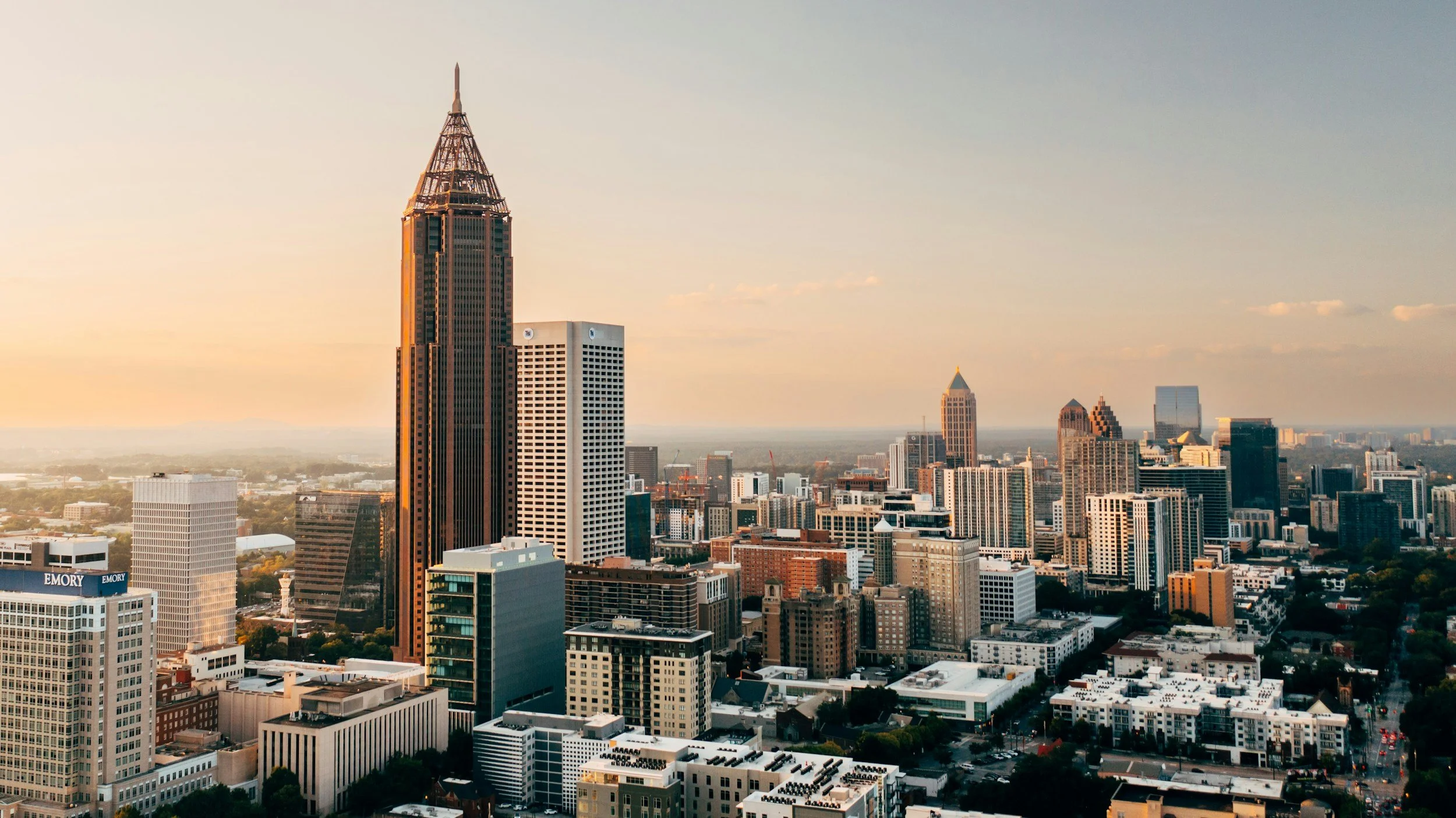
Americans tend to have strong feelings about cities. For many Americans, cities are almost not even real places at all, but mystical, foreign realms that represent and confirm their fears about crime, poverty, race, immigration, terrorism, and dozens of other social ills. Cities are not where decent, upstanding citizens live; they are simply a concentration of problems. Social scientists have recently begun to focus on the resentment of urban spaces and populations, especially among white Americans, and how this resentment affects political behavior and state decision-making.
There is a caveat, though. Not all cities seem to be resented equally. Detroit, for instance, is regularly presented in popular media as the pinnacle of vice and violence; New York is dirty and full of unhoused people, but Portland, Oregon is clean and orderly, and Seattle teems with respectable, college-educated white-collar workers. Having never been to these places, most Americans seem to grasp onto one or another stereotype of a city, and that marks the end of their “knowledge” of the city.
We are interested in determining what, exactly, determines white Americans resentment and/or admiration of cities in the US. We hypothesize that Americans use the perceived size of the Black and white population of a city as a general gauge to determine the “quality” of a city: cities that are perceived to have a large Black population will be interpreted negatively, while cities that are perceived to have a large white population will be interpreted positively.
We assume this logic to be true given the reality of concentrated poverty and crime among Black populations—a result of federal government initiated racial segregation through the redlining of the New Deal, the disproportionately negative economic effect of deindustrialization on the Black population, and the widely accepted causal link between poverty and crime—as well as decades of racial dog whistles and explicit racism that links blackness itself to crime and poverty.
To test this, we surveyed 750 white Americans, asking them, first, to estimate the population demographics of five major American cities: three cities with historically large Black populations, Detroit, New Orleans, and Atlanta, two cities with historically large white populations, Denver and Seattle, and the racially ambiguous Los Angeles.
We found, generally, that respondents who overestimated the Black population of any city were more likely to describe the city negatively (as “crime-ridden,” “dirty,” or “violent”). Conversely, respondents who overestimated the white population were more likely to perceive the city positively (as “safe,” “clean,” or “friendly”). Overpredicting the Black population of a city also decreased respondents’ desire to visit cities (especially historically Black cities), even if the trip were cost-free. Perhaps most interestingly, overpredicting the white population decreased the likelihood that respondents would try to dissuade their hypothetical child from attending college in the city.
In short, if a city is perceived as blacker than it actually is, white Americans will perceive the city negatively, and if a city is perceived as whiter than it actually is, white Americans will perceive the city positively.
To probe this relationship further, we ran two additional experiments. In the first experiment, we generated two identical tourism advertisements for the city of Chicago. The advertisements feature a family of four enjoying the city, with the Chicago skyline in the background. Above the skyline the advertisements read “VISIT CHICAGO.” The advertisements differ, however, in the race of the family presented: one white, one Black. Half of the respondents were randomly shown the white advertisement, the other half were shown the Black advertisement. We found that among Republican identifiers in the sample, as well as among those with little familiarity with Chicago, being presented with the advertisement featuring the Black family resulted in an increased overprediction of the Black population of Chicago, as well as a more negative perception of the city. In other words, observing a Black family in connection with a city leads white Americans to associate the city with a higher Black population, and, thus, to perceive the city more negatively.
In the second experiment, we sought to determine the potential political consequences of this association of blackness with negative characteristics. We generated fictional natural disaster scenarios for two cities: historically white Seattle, and historically Black New Orleans. In the first scenario, respondents were asked to imagine an 8.5 magnitude earthquake occurring in Seattle. In the second, respondents were asked to image a category five hurricane striking New Orleans. In both situations, the disasters were described as causing “widespread destruction to homes, infrastructure, and public services.” Respondents were then asked to what extent “the federal government should provide substantial disaster relief to [New Orleans/Seattle], including funds for infrastructure repair, housing assistance, and long-term recovery.” Respondents were randomly assigned to one or the other scenario. We found that respondents assigned to the New Orleans scenario were generally less likely to support federal disaster relief, and that this was especially true among respondents who overpredict the Black population of New Orleans. The blacker a city is perceived to be, the less deserving it is of relief in the wake of natural disasters.
These findings have important implications for contemporary American politics. As political conflict increasingly centers on nationalized issues and geographically distant places, voters are routinely asked to evaluate policies that affect communities far removed from their own. Our results suggest that these evaluations are often filtered through racialized perceptions of who inhabits those spaces rather than through assessments of need, fairness, or shared fate. This has consequences not only for disaster relief and place-based policy, but also for understanding the durability of racialized political appeals that target cities, immigrants, and other spatially distant “others.”
Spencer Lindsay is an assistant professor of practice in the School of Government and Public Policy at the University of Arizona, where his research examines public opinion, racial attitudes, and public support for democracy. He received his Ph.D. in Political Science from the University of Notre Dame in 2023. His work has appeared in journals such as Public Opinion Quarterly, American Politics Research, Politics, Groups, and Identities, and PS: Political Science & Politics and elsewhere.
Cody Melcher is an assistant professor at Loyola University New Orleans. His research focuses on the intersection of race and class in American public opinion and political behavior. His work has been published in Public Opinion Quarterly, Political Behavior, Ethnic and Racial Studies, American Politics Research, and elsewhere. His edited volume, Class, Race, and the US South, was published by Brill Academic in 2026.