New Books: The Power of Chinatown
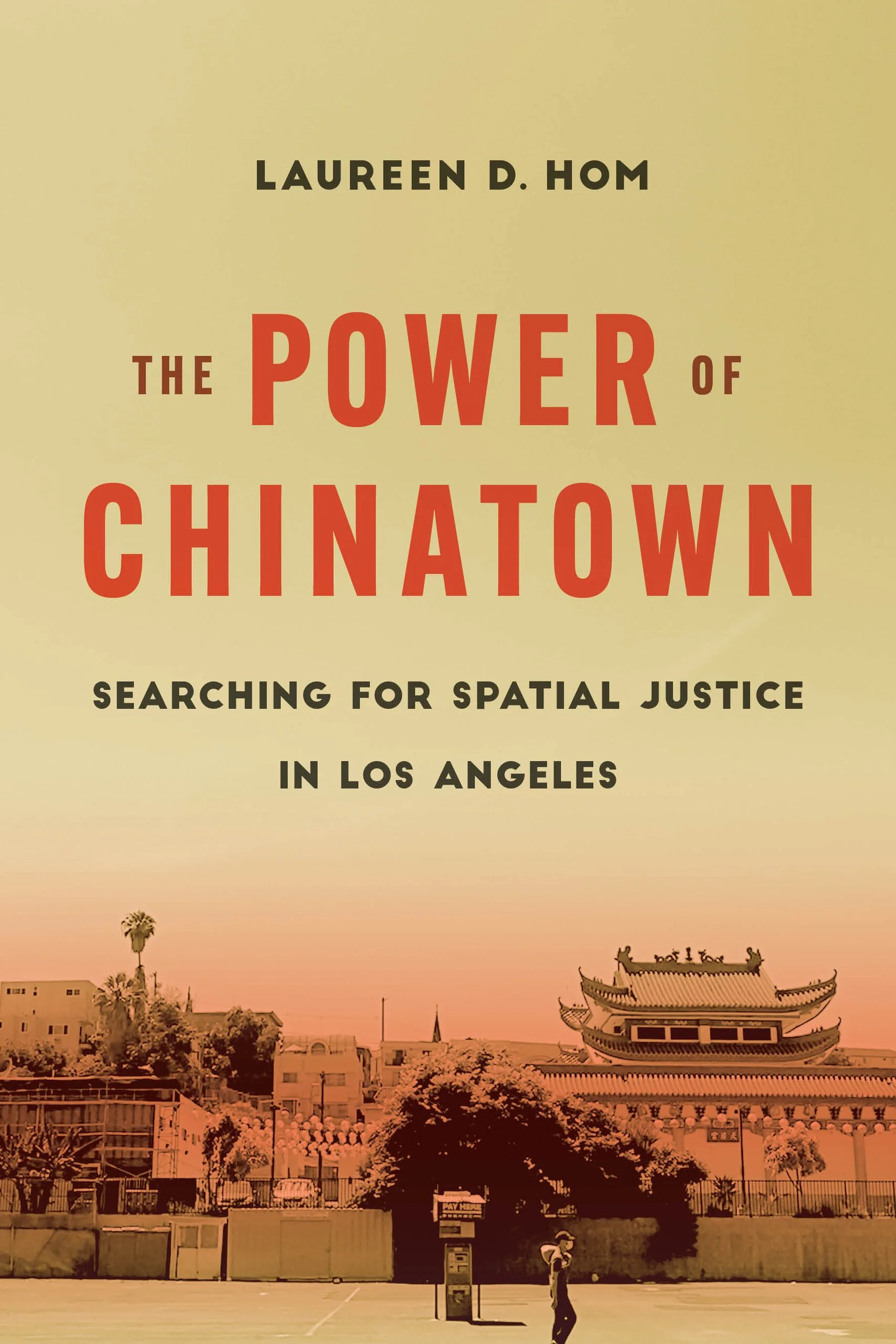
Tune in for our conversation with Laureen Hom, author of The Power of Chinatown: Searching for Spatial Justice in Los Angeles, published in 2024 by University of California Press. In The Power of Chinatown, Hom draws on ethnographic fieldwork to explore how and under what conditions residents and business owners in LA’s Chinatown challenge and mobilize dynamics of gentrification and community change.
-
Laureen Hom
I think at the very basic level of going back to the Chicago School, which is still foundational to urban studies and urban sociology and our understanding of urban change, if you look at actually the original concentric zone model, actually Chinatown is there. So it is always part of this original theorizing about urban change.
Emily
Hi, this is Emily Holloway, and you’re listening to UAR Remixed, a podcast by the journal Urban Affairs Review. You just heard from Laureen Hom, author of The Power of Chinatown: Searching for Spatial Justice in Los Angeles from University of California Press. In her book, Laureen takes readers to Los Angeles’ for a rich, mixed methods study of community politics, gentrification, and the resilience of the city’s Chinatown in the face of development pressures.
Laureen Hom
So my name is Laureen D. Hom. I'm an associate professor in San Jose State University in the School of Planning, Policy and Environmental Studies. I'm also the director of the MPA program at San Jose State University. My research expertise is at the intersection of urban studies, ethnic studies and public policy, so I research issues around community development, gentrification, issues around participatory democracy, and specific to Asian American communities and immigrant communities.
Emily
Laureen, thanks so much for being here today. Maybe to get started, could you talk a bit about how this project came about? What motivated you to explore LA’s Chinatown?
Laureen Hom
The motivations were a mix of both the intellectual and the personal. So I'll start off with some of the intellectual motivations. I have a PhD in urban planning and public policy from the University of California, UC Irvine.
And when I was pursuing as a graduate student, sitting in the classes and taking classes on urban planning around participatory democracy, collaborative governance, urban planning issues and community development, I always saw that Asian Americans were missing from those conversations. I have a background, as I mentioned earlier, in ethnic studies and Asian American studies too as well. So I really wanted to bridge some of these understandings from Asian American studies to urban planning.
So that was that intellectual motivation to bring in some of the Asian American community perspectives to these understandings of gentrification, citizen participation, all of that, and what maybe some of the similarities but also may challenge some of our assumptions about them as well. So, seeing that gap in the literature in our conversations in our classroom conversations and the literature was part of the intellectual motivation. On the Asian American studies side, though, what was interesting was that obviously we learned a lot about all the intricacies and complexities of different Asian American communities. And Chinatowns are important part of those conversations. A lot of the theorizing as well as community organizing happened in urban Chinatowns, but I didn't see too much about Los Angeles Chinatown in particular within the Asian American studies literature. What I saw was a lot of literature about the suburban communities surrounding LA and how Chinese American community formations were occurring there. So, there was a gap in the literature there. I knew firsthand that the urban Chinatown still existed so why was it not part of these conversations, even within Asian American studies, too? So that was that other end of the intellectual motivation. Personally, I have ties to both sides of my family .
One lived in San Francisco Chinatown, so I have ties to urban Chinatown through my family history, in particular my mom was born and raised in San Francisco Chinatown and my dad when he immigrated from China, his family, when he immigrated when he was 14, they first moved to SF Chinatown and during my studies when I was figuring out what do I want to do for my research, my dissertation, both my grandmothers from both sides of my family, had actually passed away, and my maternal grandmother, she had lived in SF Chinatown her whole life since she immigrated to the United States, so it was, SF Chinatown was this place of familiarity for me. I grew up going there every weekend, doing family lunches and shopping and all of that. And so with her passing, there was this -- I have a lot of questions going on in my mind about, OK, she's no longer living there. I don't have this very tangible tie to SF Chinatown, San Francisco was also going through a lot of gentrification, and especially in Chinatown at that time. And so as I knew my relationship to Chinatown was going to become more detached. And so what did that mean in terms of understanding these larger dynamics that were going to that were happening in the neighborhoods so I had this both personal question, but it lifting it up thinking about just Chinese Americans and their relationship to Chinatown in general and how I was part of that, how to implicate the community in terms of their relationship to Chinatown and their contributions or resistance to gentrification. So I was, I was just really grappling with some of those personal questions, but also connecting it to some of these larger conversations that I was seeing about gentrification in Chinatowns as well too.
Emily
We’ve spoken with several new authors this year about their research in gentrification – it's emerging as a really central concern in urban studies, but there’s not a clear consensus on what it signals or even how to study it. How are you positioning yourself, with this study, in those conversations?
Laureen Hom
I see my book primarily intervening on gentrification by focusing on the Asian American experience and Chinatowns, and really seeing how these very specific dynamics that are happening in Asian American communities and specifically, Chinese American communities, since it's the focus is on Chinatown, how those dynamics are very unique to the community but can give us these universal understandings about community change, neighborhood change, and gentrification.
There are two things I mainly see by focusing on Asian Americans and Chinatowns. The first is complicating the notions of community, because the Asian American and Chinese American community dynamics are really complex and I think there's a lot of assumptions and misunderstandings about how Asian Americans are involved with neighborhoods, and they're just especially around their political engagement, because many Asian American communities, especially Chinese American communities in particular, are geographically dispersed. They're not clustered in any one area within a region But they're at the same time they're really highly involved in both the neighborhoods that they live in, but also the neighborhoods that they're not a part of, which in particular are urban Chinatowns because they hold so much value, whether it's the heritage, economic investment into Chinatown, all of that, just multiple meanings and values for the neighborhood. So it really, really begs this question about how do we define community given that, especially in a place like Chinatown?
Thinking of definitely the residents, and that's really important gentrification studies right to center tenants, residential and commercial tenants, because of the ones who are most vulnerable for forced displacement. But Chinatown adds this extra layer of complexity of who? We also center these when we talk about community because it has this broader significance for the larger Chinese American community beyond the geography. So when we practice and define community in community engagement practices, when we say community driven portal development.
And what does that actually mean and how do we unpack that? And I think Chinatown allows us to critically analyze that and to really unpack that too and to think about what are these spatial boundaries of community, right, and how much do we grapple with that in our urban planning practices?
The other component that I think Chinatown – I think is not unique to Chinatown, but Chinatown gives us really rich insight – is to think about gentrification within this systems or ecosystems framework. So, Chinatown is what many people describe some. Planners might say a complete neighborhood. A lot of people just say an ecosystem, in the sense that it has this residential, commercial institutional core, like components of all of that combined traits, what the character of Chinatown is, the cultural character.
And so I think in some in gentrification work, sometimes we focus purely on the housing component and seeing residential displacement or the commercial component and looking at the small business displacement and all of that, and which is really important, but I think when I did my study in Chinatown, I had to look at it collectively to see what was happening the changes that were happening with these individual components of Chinatown but also see how they were connected with one another too. So when there were changes in the small businesses, it gave insight also and led to ripple effects to what we're going to be some possible changes and displacement pressures on to the residential character as well too. So the complexities of those relationships too and grappling with those relationships rather than seeing these individual components of the neighborhood changing and seeing them as mutually exclusive. But really seeing it more holistically and interconnected.
Emily
And maybe setting that dimension aside for a moment, we can talk about Chinatowns more generally. Why are they so important to study? What can scholars in urban studies learn from them?
Laureen Hom
I think at the very basic level of going back to the Chicago School, which is still foundational to urban studies and urban sociology and our understanding of urban change, if you look at actually the original concentric zone model, actually Chinatown is there. So it is always part of this original theorizing about urban change.
I think what the issue has been, it's just been inconsistently part of the evolution of those conversations. So I think we're seeing more literature on urban Chinatowns. But I think they've been missing and they're just really critical for if they were included in that original theorizing should think through also the history of their evolution. And what insight they can provide to how our understanding of urban change has shifted over time. A perspective specific to thinking about Asian American communities and their importance and urban Chinatowns are a place of heritage and history of that early mass immigration and migration to the United States of Early Chinese migrants. And so they represent that history that's not really recognized in a lot of mainstream historical tax. Still, right. So Chinatown really is: That important physical marker of that history that I think of , a lot of Chinese Americans don't live in Chinatown and Asian Americans, too, really understand value and why they fight to protect the community. At the same time, Chinatown is not just this historical site: It's a contemporary community that's been evolving andongoing immigrant gateway especially for working class Asian immigrants for many decades. And so in a lot of ways, Chinatown also represents this resistance to the model minority perceptions of Chinese Americans of Asian Americans as this successful group and culturally and socioeconomically assimilated. Chinatown shows that that's not the case in a lot of ways, and there's a lot of social and urban issues around poverty and labor happening in Chinatown, that if we don't highlight it can be ignored because of this dominant framing of Chinese and Asian Americans. So Chinatown matters in all these different ways for the Asian American community.
Emily
Now, turning to Los Angeles specifically – your book documents some of the major and also smaller scale changes that have shaped the city’s Chinatown, some more directly than others. Could you take us through some of those dynamics? What do you see as some of the most significant policies and trends shaping the neighborhood in the late twentieth century to today?
Laureen Hom
Yeah. So I think one of the biggest one of the major changes – and I think this always surprises people – and this happened because of the changes in immigration policy after World War II and the liberalization of immigration from and immigration from Asian countries that Chinatown, LA Chinatown, specifically starting in other there's the census data is a little difficult to measure this because they changed racial categories throughout, but it became a majority Asian American, Chinese American space starting in sometime in the 1970s. So, before that it was actually a multiracial multiethnic immigrant neighborhood with Chinese, Mexican, and southern and Eastern European immigrants prior to that.
So that was one of the major shifts that happened post 1970 onward that there's some headlines about Chinatown from the LA Times during this era in the 70s, that Chinatown is, "becoming more Chinese” and is serving the Chinese now because before I was saying that it was primarily this tourist area, which isn't totally true, but is part of that component of Chinatown's identity.
I think that's one major change in its more contemporary history that it became this predominantly Chinese and Asian American space residentially. In more recent years, starting around the mid 90s, this is where we're starting to see some of the more contemporary concerns about gentrification happening in the neighborhood. One of the biggest or one of the major indicators was the presence of art galleries, and that came into this one specific area in Chinatown called Chunking Road. And so I think it really speaks to a lot of the theorizing and assumptions about the waves of gentrification, that we see artists that come into the neighborhood and the first wave of gentrification, and they were very much in a lot of in Chinatown. They were very much isolated into that one area. And it became part of city's larger art gallery scene too. And I think it was just in talking to some folks they saw Chinatown as this cool, interesting space to move into. It was empty storefronts because some of the businesses had have left. And so this is the property owners were willing to rent to them as well too. So, it was a mixture of different reasons why they came to the neighborhood.
Moving forward from there, like about a decade later in the early 2010s, which is really the start of when I did my field work, we started to see also some more corporate businesses coming into Chinatown, not too many still, but we saw Starbucks coming in.
In 2012, there was a huge controversy over Walmart neighborhood market being built in the neighborhood and actually after a couple of years it shut down, and that was due to the larger business decision by Walmart, that didn't have anything to do with the consumer behavior and not the individual neighborhood market. So we're seeing that presence too, which was disrupting the small business, the small business identity of Chinatown which is pretty historically has been about immigrant Asian immigrant owned “Mom and Pop” stores.
With the changes with the business character, we're still seeing some small businesses come in, but there's also shifts in that too. LA Chinatown became part of this. It was always an important place and people came to Chinatown because they wanted to go to the restaurants there and eat Chinese food, and so that restaurant identity of Chinatown was always important since its founding, but the character of those restaurants also shifted in recent decades. And so we're seeing more restaurants that were more fusion food, not Chinese cuisine coming into the neighborhood, and these were heavily publicized in a lot of local media that was around this foodie scene, like LA Eater and all those other on social media as well too. So they were capitalizing on that restaurant scene and local restauranteurs and celebrity chefs like Roy Choi were coming into the neighborhood as well, too. And it became this question of yes, it's still a small business independently owned, but are these restaurants really serving the community, do they serve the low-income working-class residents in the neighborhood? Do they employ them? They became part of those larger questions. Demographically, it was talking about mainly the commercial shifts, but demographically, the Chinatown is still growing overall population but there were some shifts in the racial character, so less Asian Americans, more people who identify as white are moving into the neighborhood. But I think probably the most pronounced shift was some of the changes in terms of people's professional status. So we're seeing more people who work in professional industries moving into the neighborhood as well too, and less families as well. So, when I talked to folks who were involved with the elementary school in the neighborhood, they talked about a decline in enrollment, it had to do with less families moving into the neighborhood too.
Emily
That’s really interesting, thank you for walking me through that. A lot of the book is dedicated to analyzing different kinds of local, grassroots organizing – some of it explicitly political, but some that are really focused on the business landscape in the community, like BIDs, or business improvement districts. Can you talk about those choices a bit? How do these different mobilizations come together?
Laureen Hom
Yeah, so I put them, I think some people might be wondering, why did I put these two like or these three different entities into one chapter? And so the neighborhood council, the citizen participation committees that came through development, and the BID's, and I put them together because they were part of this larger trend, contemporary trends in policy making to try to encourage private actors however we define them, but just basically people who are not part of the politically decision making to be part of the political process and decision making around land use issues and I think they all represent that the BIDs represent one end of the spectrum in terms of how these practices are realized.
And in terms of how much do they actually promote democratic decision making and ultimately to equitable outcomes, so I think that's the tension that we're seeing with some of these policy making mechanisms that are trying to promote the public, however we define that, our communities and however we define that, into the decision making process.
So on one end you have those spaces of citizen participation as I mentioned, like the neighborhood councils and the project area committees, the community advisory committees, the PACs and CACs in Los Angeles that were formed when Chinatown was designated as a redevelopment project area, and these were part of this city's response to past critiques about not involving the community in land use decision making and using eminent domain to forcibly displace a lot of communities for these big projects, most notably Dodger Stadium in Chavez Ravine, which neighbors Chinatown.
So when Chinatown was designated as this redevelopment project area in 1980, the city had gone through that criticism, and so they were implementing these PACs and CACs and institutionalizing them in in part of the process of redevelopment to try to get formal community input, I think this goes back to just that foundational work of Sherry Arnstein right. Thinking of the ladder of participation, there's critiques about to what degree people are really empowered and can really influence decision making. Really depends on the structure and the dynamics happening in these spaces and that's what I explore in that chapter. And so that's one and then the other end are these business improvement districts, the BIDs which utilize that public private partnership model and a local nonprofit organization manages these BIDs and they get extra funding through these additional tax assessments to do more activities around economic development. What I found, and I think this probably is not too unique in terms of Los Angeles Chinatown and I think this is similar dynamics happening in other BIDs, especially ones that are in small neighborhoods, is that the nonprofit organization is actually completely represented by the property owners. The commercial property owners in the neighborhood. So in a way, the BID created this legitimate space through local policy for these commercial property owners to leverage more political power and control the financial resources that came through, the tax assessments and also build relationships with people who work in the city, local electeds, etc.
And so the governance structure of these BIDs, is unlike the PACs, the CACs and the neighborhood council, they don't have to follow any participatory democratic principles or structures, so it's just the board and they determine these decisions. They don't have to have a resident be a part of the board. They don't have to have any other type of stakeholder be a part of it. So it in a lot of ways the BID represents that limit of these different mechanisms that try to formalize community power and community control by the city, and ultimately the BID has been this neoliberal entity because what they're doing is really asserting private control over the larger public spaces in Chinatown, because a lot of what they do is having private policing, police force and securing private property ownership rights and asserting that as part of their economic development strategies for Chinatown.
Emily
In our last few minutes, I wanted to talk about another trend that isn’t unique to Southern California but may be a bit more pronounced, just due to the geography of the state, among other factors, is the prevalence of suburban Chinatowns vis a vis urban, downtown Chinatowns. What distinguishes these typologies from one another? Are they, or at least their respective business communities, in competition with one another in any way? What makes the urban Chinatowns unique?
Laureen Hom
So, Chinatown's no longer the center for Chinese Americans. And one of the many places that folks, whether within the community or tourists want to "experience Chinese American culture.”
I think Chinatown still holds a lot of meaning and will continue to, because of its historical significance for the Chinese American community representing that older history. I say this also knowing full well that Chinese Americans are both the oldest and newest immigrant community in a lot of ways.
This is just ongoing immigration of folks who identify as ethnic Chinese. And so, there are going to be generations who may have not as strong ties to that older immigration history. Personally, my relatives were laborers coming to the US at the turn of the 20th century and couldn't ever settle into the US because of the exclusionary policies. But folks whose family history starts in what we call the post ‘65 context where the 1965 Immigration and Nationality Act opened up immigration. They might not have necessarily that that history too, so that weakens the ties just a bit. But it's still this important collective community history.
I think this is where LA provides this very unique lessons learned. And I think for now I can maybe say this might be a unique context of LA, but I'm sure as people dig into more histories of other urban Chinatowns, they might find something similar. But in the LA context, there are always multiple Chinese American settlements coexisting with each other at some point, so this whole suburbanization of Chinese Americans and these ethnoburbs and satellite Chinatowns -- that in the LA context, we could argue is not unique. So even old Chinatown, which formed in 1870, it coexisted with another neighborhood called City Market, which formed in the early 1900s, and that was a Chinese and Japanese American settlement, primarily commercial, but also had some residents too, and so over time there were other Chinese American settlements in the southern, primarily eastern areas of Los Angeles, too. And there's ebbs and flows in terms of the remnants of them are not as pronounced, like we don't see too much physical remnants of them or the businesses, but they were there and they coexisted. And I think what LA tells us is it's possible for these different Chinese American spaces to exist with each other, even if there might be like a very precarious relationship, they might be in competition with each other. They might complement one another, they might represent different aspects of the Chinese American community. But it's possible for that to happen, and I think LA provides this important history for that, that we might see it might as people do more historical research on other cities in urban Chinatowns, you might see that in other areas. But I think LA Chinatown provides great lessons for that.
Emily
My thanks to Laureen Hom, author of the Power of Chinatown from University of California Press. You can find a link to the book in our show notes.
You’ve been listening to UAR Remixed, a podcast by Urban Affairs Review. Special thanks to Drexel University and the editors at UAR. Music is by Blue Dot Sessions. This show was mixed and produced by Aidan McLaughlin and written and produced by me, Emily Holloway. You can find us on Bluesky at @urbanaffairsreview.bsky.social for updates on the journal and the show. Please rate, review, and subscribe on Apple, Spotify, or wherever you get your podcasts.