San Francisco Residents’ Experiences in the Latest– and Largest– Public Housing Redevelopment Program in the US
Valerie Stahl (San Diego State University)

Public Housing, Redeveloped
Since its introduction in the 1990s, researchers across disciplines painstakingly analyzed HOPE VI, a public-private redevelopment initiative that transformed over 100 thousand units public housing across the United States while also displacing an estimated 250,000 residents.
Despite it being adopted for the last fifteen years and being poised to convert four times as much public housing as HOPE VI, much less attention has been given to outcomes of the US Department of Housing and Urban Development’s Rental Assistance Demonstration, or RAD program. Given past displacement outcomes in public housing redevelopment, detailing resident experiences with the program is particularly important.
My latest study in Urban Affairs Review takes a closer look at resident experiences with RAD in the largest US city slated to redevelop all its public housing through the program: San Francisco, CA.
RAD and the Next Frontier of Public Housing Redevelopment
RAD is a program that intends to preserve public housing through changing how it operates. While there are several different models, put simply, in the absence of continued federal funding, RAD brings on non-public actors to assist in the management, financing, and in some cases, ownership of public housing. Nearly 500,000 units of traditional public housing– which are publicly-owned and operated units capped at 30% of a residents’ income– are now eligible for conversion under RAD, making it the primary mechanism for public housing redevelopment in the US right now, and the largest one to date.
Why look at residents’ experience with RAD in San Francisco, CA?
While nearly 500 public housing authorities (PHAs) are taking on RAD projects across the country, San Francisco is a particularly useful case to examine for several reasons. First, as an early adopter of RAD, the city had more completed RAD projects to examine than elsewhere. Second, San Francisco is also currently undergoing a full portfolio conversion under RAD, meaning that it will no longer directly own, manage, and operate any public housing in the city, instead largely outsourcing these functions to nonprofit and private developers. More broadly speaking, San Francisco is a technology hub and “superstar city” known for its very high housing costs; this allowed me to analyze how residents perceive RAD in a context where subsidized housing is very badly needed while neighborhoods are feeling increasing strains of gentrification.
RAD Projects across San Francisco
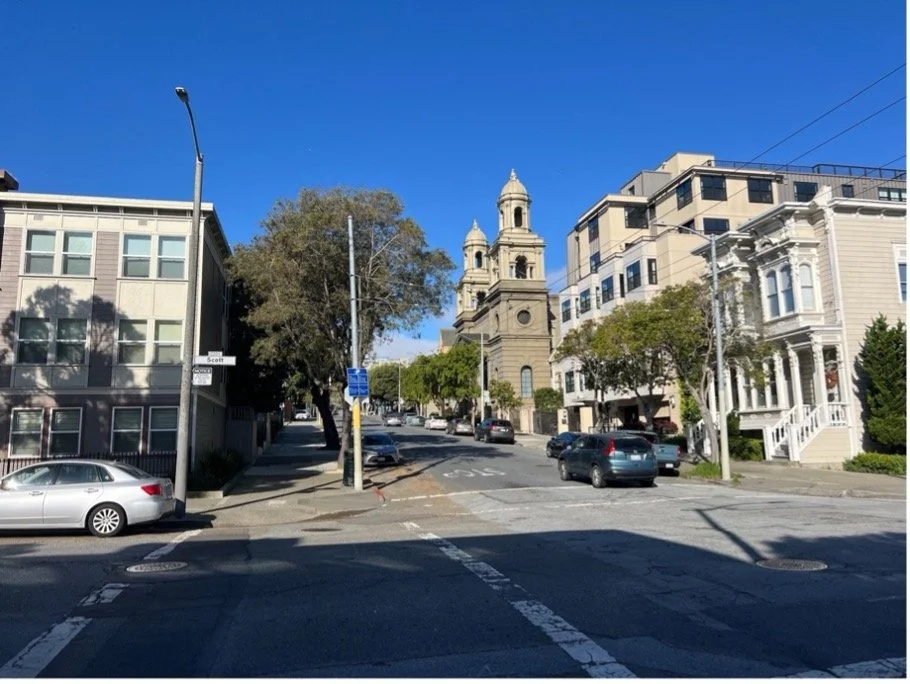
In this research, I was able to visit communities and speak to residents at six projects across four neighborhoods geared towards low-income families. From the site visits I conducted, I could see the differences in neighborhood access across the projects straight away. Three of the neighborhoods with RAD projects were in centralized parts of the city with good connections to retail, health care, and public transit, as seen outside of one of the projects in the photo below.
On the other hand, one area with several RAD projects, the Hunters Point/Bayview neighborhood, was particularly isolated. As the photo below suggests, the post-industrial area had abandoned cars, empty lots, and was quite far from the closest retail and transit options. The area is also known for a history of environmental injustice, with higher rates of pollution, asthma, and lead risks in housing than other parts of the city.
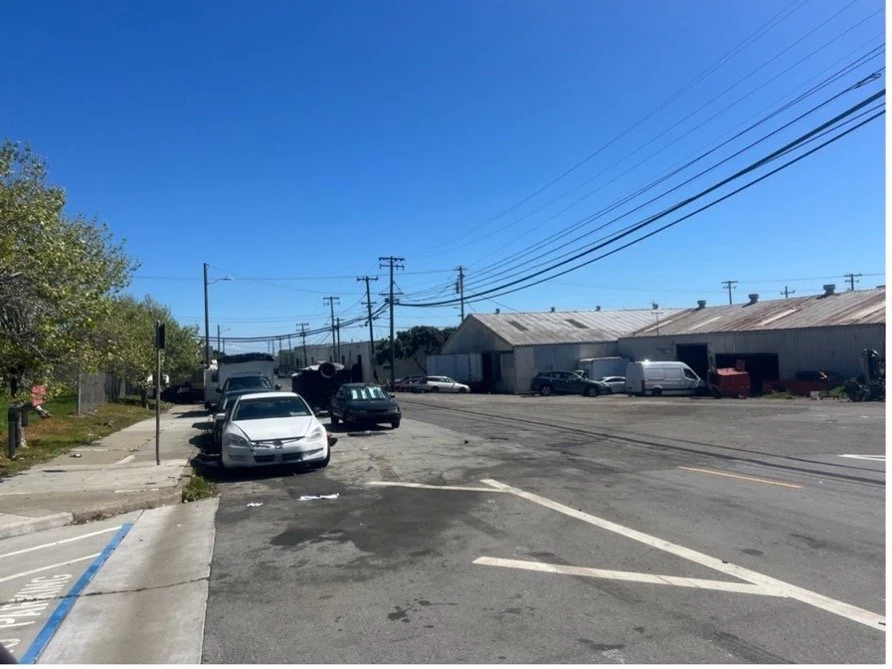
These differences across areas demonstrated how the original locations of San Francisco’s public housing as the city changed around it left some residents sitting on pockets of affordability in increasingly gentrified areas, while other residents who started off in socially and racially isolated communities continued to be so.
How did a small group of residents describe their experience with RAD conversions?
In terms of positive experiences with RAD, residents described clear communication from the housing authority about the redevelopment at the time of conversion, continued affordability, favorable experiences with maintenance, and perceptions of healthier homes. Unlike past research on HOPE VI, residents interviewed in San Francisco largely did not view RAD as an effort to privatize or gentrify their communities.
On the other hand, many residents described negative experiences with new management, including no longer knowing who was responsible for their homes and communities, decreased opportunities for participation, and a lack of clarity about some of their rights under the program. Further, the differences across the two types of areas described above colored how residents spoke about their experience with RAD conversions. Namely, physical improvements to public housing do not inherently improve surrounding areas that are suffering from broader legacies of poverty, disinvestment, and environmental racism.
RAD and the Future of Federal Housing Policy
In the continued absence of funding for traditional public housing in the US, these findings point to important policy recommendations for promoting improved outcomes for residents. It is first worth mentioning that under the Trump administration, where HUD’s basic functions are under, significant policy change seeking improvements to federal systems is unlikely. However, researchers and policymakers must think beyond the current political moment if we are to attempt to better preserve– and eventually expand upon– federally-subsidized housing for low-income residents.
First, given residents’ negative experience with new management, housing authorities implementing RAD could promote strong monitoring of non-public actors and support for residents as they manage these new relationships. Second, PHAs should also ensure continued participation mechanisms among residents throughout and beyond the completion of RAD conversions. Finally, PHAs should account for the broader context of a neighborhood in RAD conversions to foster greater resident agency. Through my findings in this case, in some instances, residents expressed extreme satisfaction with their communities and a desire to stay put, whereas others shared experiences of a lack of safety, racial isolation, or environmental injustice with a strong desire to leave. Given that a policy mechanism under RAD offers residential mobility options, in a different political context, HUD could adopt its voucher rules to prioritize mobility options for residents living in areas with high rates of poverty, environmental hazards, or racial exclusion. Ultimately, As RAD signals the final frontier of traditional public housing provision in the US, monitoring where it succeeds and where it falls short for residents is critical.
Valerie E. Stahl is an assistant professor of City Planning in the School of Public Affairs at San Diego State University. Her mixed-methods research focuses on equitable planning, deeply affordable housing, land use, and health disparities in the built environment.