A failed land development project and its implications for urban governance in China
Yi Feng (Nanjing University), Fulong Wu (University College London) and Fangzhu Zhang (University College London)
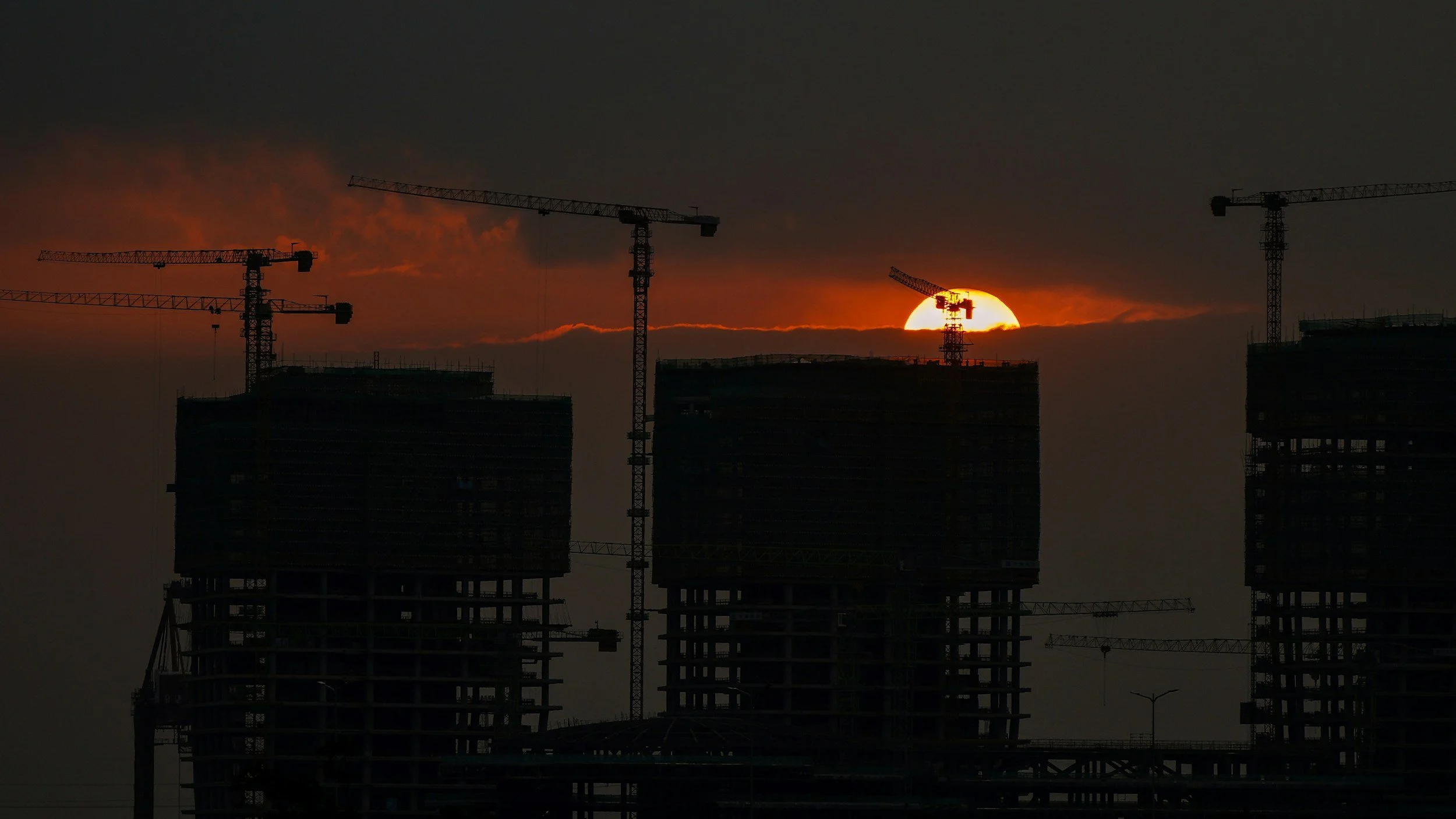
China’s urban development has been driven by local governments’ land-centered operations. Since land is the most valuable resource under local control, land development has been the central mechanism of China’s urban development model. Local governments, like entrepreneurs, lead the construction of new urban spaces for accumulation, including new towns, mega-urban projects, and eco-cities. Because the expansion of land development is associated with expected income from land sales, it serves as a guarantee for local borrowing. In doing so, local governments channel more investment into land projects, fueling a pervasive trend of building new cities and new areas across the country. The operation of land development depends largely on future land appreciation, from which local states can benefit. In an era of economic downturn and a stagnating property market, land value appreciation is not guaranteed. What are the outcomes of land development projects in contemporary China.
This study, funded by ERC (ChinaUrban project), uses Dali as a case to foreground this issue. Dali is a third-tier city famous for tourism. Nevertheless, its municipal finances rely heavily on land income rather than on its prosperous tourism industry. The Dali government, as a local state entrepreneur, has sought to develop more land to gain profits. Its main approach is developing Haidong New Town. The eastern side of Erhai Lake was less developed than the western basin, and officials saw an opportunity to create a new urban center. A development committee and an urban development corporation, or chengtou, were put in place. The corporation prepared land and built infrastructure, while developers purchased sites for housing and hotels. The project relied on borrowing, land sales, and the continuing participation of developers. Nevertheless, environmental protection of Dali has become a stronger political priority since 2015. After central and provincial intervention, an environmental inspection in 2018 led to the suspension of Haidong New Town. Dali tried to adjust its approach. It reduced the scale of Haidong and sought to resume construction on land that had already been developed. It also proposed a new zone outside the protected area. Neither option restored the old model. Much of the valuable land in Haidong had already been sold, so a smaller project could not generate new revenue. The new zone lacks the same fame and natural landscape advantages, and it still requires funding that the local government and its chengtou do not have.
By investigating the new town development practices in Dali, we find that land-based entrepreneurial activities may fail to adapt to changing political-economic contexts and reveal intensifying tensions within China’s previous developmental model.
The Dali government failed to develop Haidong New Town and its successor, Dali New Zone, representing the understudied failures of urban entrepreneurialism in China. By definition, urban entrepreneurialism means that local governments act like entrepreneurs to attract capital and stimulate local economic growth, an approach that can yield both successes and failures. However, existing studies of China’s state entrepreneurialism have largely focused on successful cases of urban development, emphasizing the state’s capacity to drive growth and mobilize market resources. The failure of the Dali case calls for a reconsideration of state entrepreneurialism by identifying the conditions under which this model can or cannot be sustained. Consequently, the earlier model of land-centered state entrepreneurialism is becoming impractical, even in vibrant tourist cities like Dali.
The failure of Dali’s land development project is not an isolated case but reflects national patterns of China’s urban governance and its ongoing transformations. Its heavy reliance on income from land sales and its local development impulse to capture land benefits are similar to those of most Chinese cities over the past three decades. It also faces intensifying state interventions in environmental protection, a pattern similar to that observed in recent studies on the reinforced central inspection system in environmental governance. What can be generalized from Dali is not the outcome of project failure, but the broader dynamics that produce such failures. It demonstrates that the conditions under which land-centered state entrepreneurialism once flourished have been undermined, leading to a new landscape of urban governance in which local governments struggle with changing state priorities, shrinking land revenues, and intensifying fiscal burdens.
Yi Feng is an Assistant Professor of Urban Planning at Nanjing University. She was a postdoctoral research Fellow at University College London, funded by the ERC (ChinaUrban project). Her research covers urban governance, land development, financialization, and urban political economy.
Fulong Wu is Bartlett Professor of Planning at University College London. His research focuses on urban development in China, addressing social and sustainability challenges. His recent publications include Creating Chinese Urbanism: Urban Revolution and Governance Changes (2022), and Governing Urban Development in China: Critical Urban Studies (2025, co-authored with Fangzhu Zhang). He leads a European Research Council Advanced Grant project titled “Rethinking China’s Model of Urban Governance.”
Fangzhu Zhang is a Professor of China Planning at the Bartlett School of Planning, University College London. Her main research interests focus on innovation and environmental governance. She is a co-editor of Handbook on China’s Urban Environmental Governance (Edward Elgar 2023). She is a founding editor-in-chief of Transactions in Planning and Urban Research. Currently, she is working on the ERC Advanced Grant project titled “Rethinking China’s Model of Urban Governance.”