Immigrants in Crisis
Mara Sidney, UAR Co-Editor
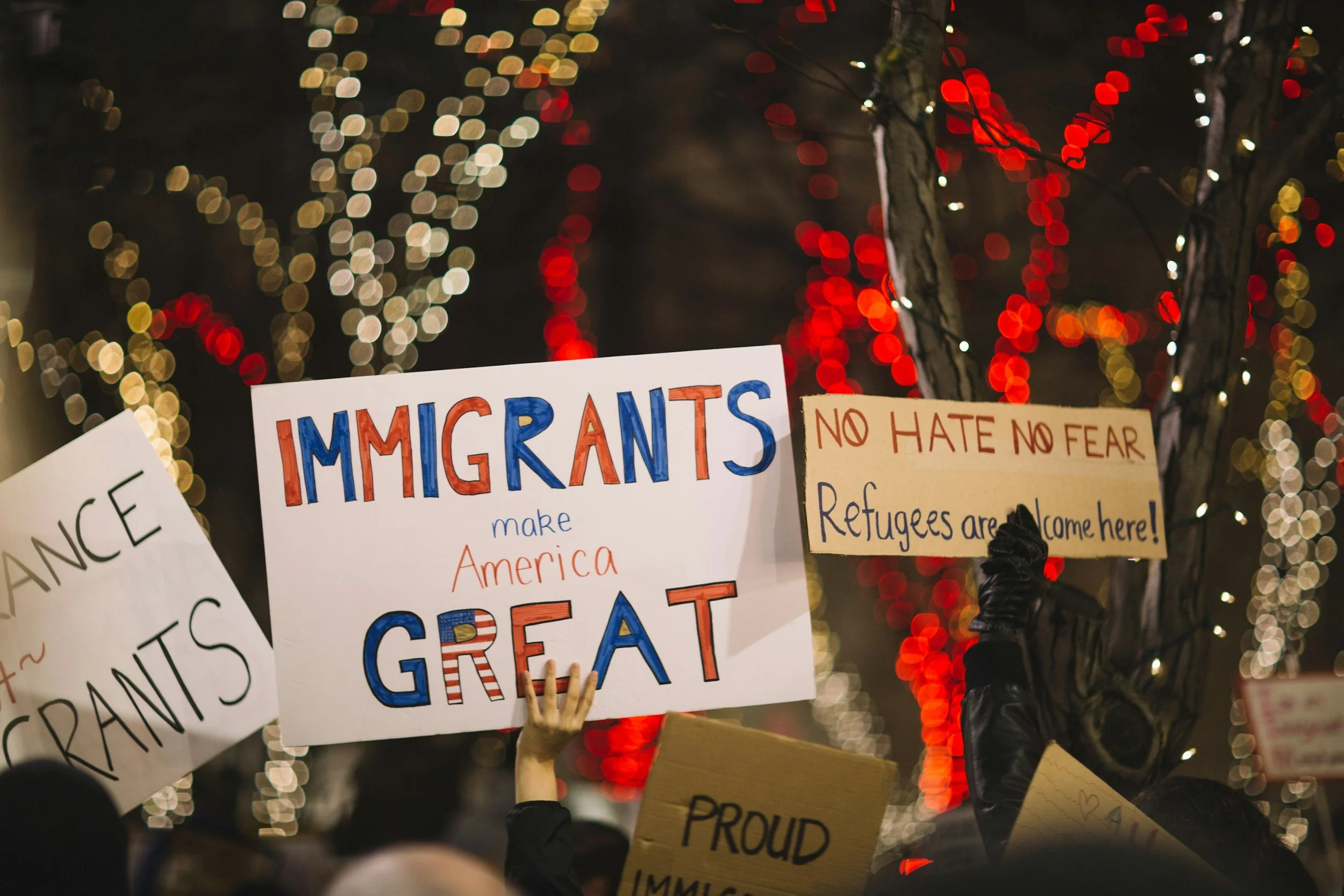
Many immigrants and asylum seekers, authorized and unauthorized, currently experience acute dimensions of urban crisis in the U.S. and around the world. In the United States under the second Trump administration, enforcement of national policies by federal immigration and border control agencies has rapidly intensified, resulting in large-scale detention and deportation actions that often repress or infringe upon immigrants’ civil and human rights. These actions, frequently targeted at specific cities (e.g., sanctuary cities, Democratic party-led cities, among others), have sparked protests from advocates and social movement organizations, capturing international attention. Increasingly, U.S. citizens engaging in advocacy have met arrest and even violence. Yet local resistance to national policies governing immigration and asylum seeking is not new, in the U.S. or elsewhere. Because so many immigrants live in metropolitan areas, cities often are, and have been, at the center of the contention.
Why do some cities welcome immigrants and forced migrants, and develop supportive infrastructures, whereas others defer to, and aid in, restrictive national enforcement measures? How and when do advocates, including immigrants themselves, protest restrictions and claim their rights? What are the roles of urban research in times of crisis? Urban scholars have sought to answer these questions over the years in the pages of Urban Affairs Review. This collection of UAR articles explores local immigration policy and advocacy prior to, and during, President Trump’s first administration, as well as in European cities in the 2010s.
Using qualitative case studies, Bazurli and Kaufmann (2023) and Van Eck (2022) analyze the political dynamics through which European cities develop local protections and services for those immigrants excluded by national policies. They highlight the relationships between civil society organizations, local officials, and national governments, tracing institutional variation across national contexts.
Two studies revisit the 2006 protests in U.S. cities that responded to a sweeping, and ultimately unsuccessful, legislative effort to criminalize unauthorized immigration. Dionne et al. (2014) and Benjamin-Alvarado et al. (2008) examine patterns of mobilization and participation within traditional immigrant strongholds and “new immigrant communities” respectively. Both articles highlight the unifying effects of opposition to regressive policy across different geographies and even political agendas, and the key role of communications technologies (including novel digital platforms) in fostering networks of resistance.
Finally, two articles offer different approaches to studying the strategic political discourse of immigration, and how research can surface and fact-check conventional wisdom or popular narratives. Abu-Laban and Garber (2005) show that an immigration “crisis” is in the eye of the beholder, or in the voices and the pages of media, which may echo official government narratives and both reflect and shape policies. O’Brien et al. (2017) analyze the relationship between crime and sanctuary policies, refuting the common political claim that these policies lead to increased crime.
These studies offer direction for further scholarship and points of comparison for scholars, practitioners and advocates. They provide important context to the current moment and underscore the urgency of urban research on multiple dimensions of immigration politics and policy.