Tyeshia Redden (University of Toronto)
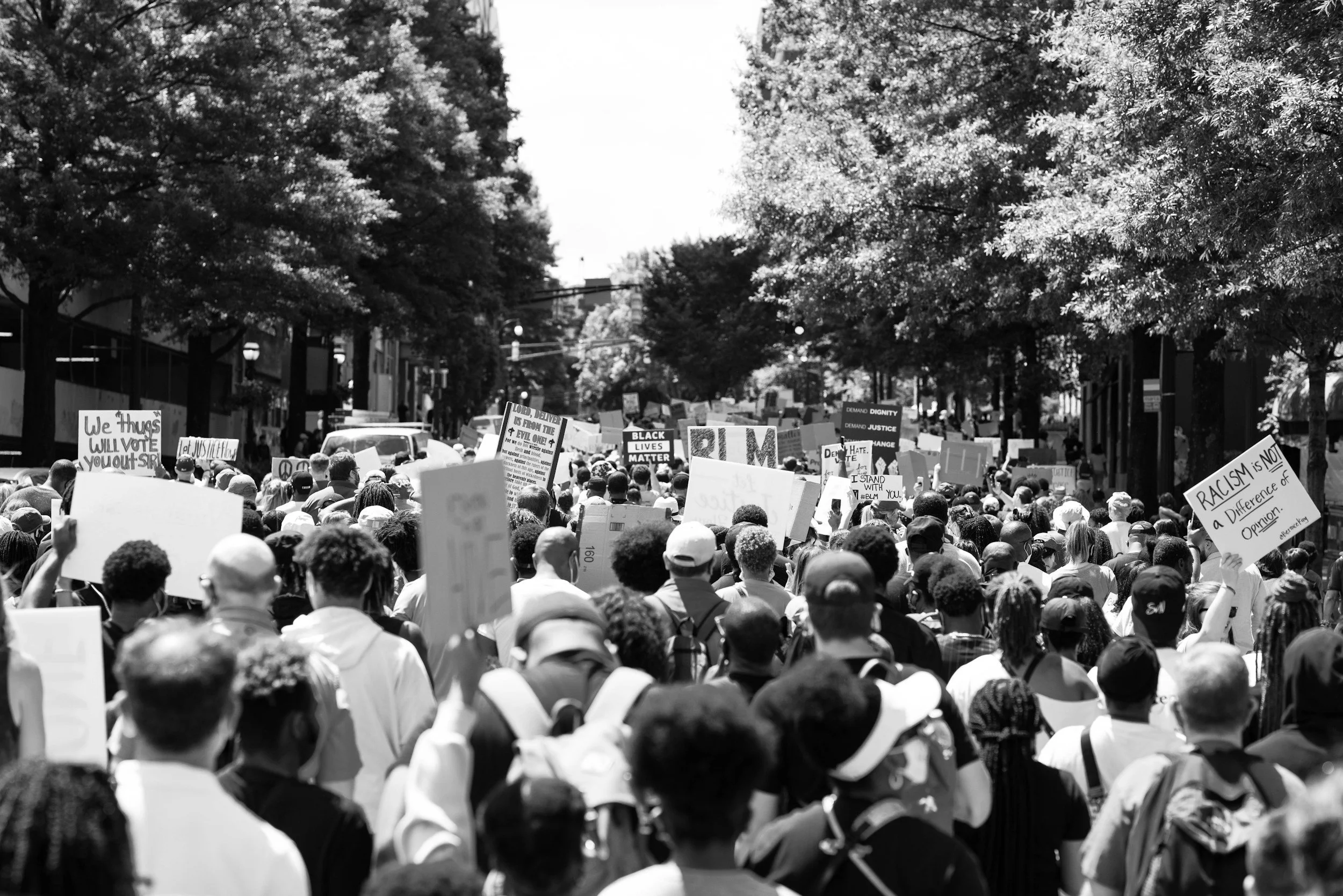
In 2020, it seemed that the United States (and the world) might be on the verge of significant structural change regarding racial justice. And Atlanta, a city with a Black mayor and Black majorities on the City County, School Board, and among the Police Department appeared poised to make substantial change in its urban policies. Then-Mayor Keisha Lance Bottoms supported a movement to “defund the police,” diverting $73 million from the APD budget to social services and then-City Council member Andre Dickens authored legislation to close and repurpose the City Jail as a community resource center. But quickly, the political tides turned and instead, Mayor Bottoms announced the construction of the $90 million dollar Atlanta Police training facility, colloquially known as “Cop City.” The resulting theatre of events included domestic terrorism charges, protests, and the trampling of democratic norms. Intrigued (and appalled), I decided to investigate why Atlanta’s Black-led municipal leadership would suppress sustained activism against police brutality, preferring instead to embrace an escalation in militarization.
Over the decades, Atlanta, Georgia has been a prominent example of pro-growth urban policies in the post-Civil Rights Era, often cited as the preeminent model for racial cooperation in the U.S. Steered by the “Atlanta Way,” a biracial coalition of Black and white business and political leaders, Atlanta flourished amid increasing corporate, entertainment, and real estate investment. But critics have long questioned how equitable Atlanta’s explosive growth has been as the city’s economic inequality soared alongside its business investments. Scholar Adolph Reed Jr. queried if all proverbial boats were rising in the “city too busy to hate,” or was the bounty of capital accumulation reserved for only “a “certain strata” of Black people. Concerns have been well-founded as Atlanta’s urban development consistently relied on Black displacement and hypergentrification chipped away at the city’s Black majority. By the time national protests against police violence roiled the country in 2020, Atlanta was no longer a Black majority city, though anti-Blackness would play a prominent role in what came next.
Consequently, I use Cop City as an illustrative case for understanding Black elites’ role in local urban politics. Specifically, I was interested in how Black elites can simultaneously galvanize Black voters around issues of racial injustice and act as agents of capitalism that reinforce punitive values as a function of their middle class identities. Although crime was also a major concern for poor Black Atlantans, the Black bourgeoise, allied with white business interests, frequently prioritize punitive policing that targeted “victimless” behaviors, like loitering and sex work, in the pursuit of protecting economic commerce and “orderliness.” As I created a focused retelling of the events, I found Raphael Samuel’s words particularly compelling: “…[e]ither poverty must use democracy to destroy the power of property, or property in fear of poverty will destroy democracy.”
Interestingly, Atlanta’s transition from white to Black political leadership during the 1970s had all the hallmarks of a major social inflection, but the urban policies remained the same. From major league sports teams acquisitions to the 1996 Summer Olympics to the Atlanta Beltline project, Black residents were dispossessed and their communities disrupted, if not razed to the ground. Atlanta’s “Wakanda” nickname and Black cultural production were of little consolation to Black residents experiencing soaring rents and near constant police abuse. In 2020, Mayor Bottoms, a rising star in the Democratic Party, found herself amid chaotic urban uprisings, COVID-19-related clashes with Governor Brian Kemp, and the shocking death of eight-year old Secoriea Turner at the hands of armed protestors. The City Council voted down the measures to close the City Jail and to divert police funding. Instead, aligned with the Atlanta Police Foundation, itself a shadow police budget funded by local titans including Coca-Cola and Waffle House, Mayor Bottoms announced Cop City, an 84-acre police facility that includes a mock village to train officers in urban warfare.
Sited in the Weelaunee Forest, a part of the Mvskoke (Creek) ancestral homelands, the facility quickly drew public backlash. The Atlanta City Council met after hearing 1,100 constituents’ comments over 17 hours and the public comments suggest that at least 70% of the responding constituents opposed the facility’s construction. Though, in a 10-4 vote, the City Council authorized Cop City’s ground lease. By late 2021, “forest defenders” joined local efforts to “Stop Cop City” by creating encampments in the Weelaunee Forest. Even though Bottoms’ successor, former City Council member and now-Mayor Dickens voted to defund the police and wrote the legislation to repurpose the City jail, his support of Cop City was unwavering.
Over the coming years, protestors pressuring construction companies and sabotaging equipment were arrested and Mayor Dickens launched a media campaign labeling them as “white outside agitators.” Environmentalists were charged with domestic terrorism and local bail fund organizers were indicted under Georgia’s Racketeer Influenced and Corrupt Organizations Act (RICO), falsely suggesting that the ‘Stop Cop City’ movement was an organized criminal enterprise that began May 25, 2020, the day George Floyd was murdered. Indigenous forest defender Manuel “Tortuguita” Terán was shot to death by a law enforcement coalition, sparking another wave of protests and eventually organizers collected over 116,000 signatures to trigger a referendum on Cop City’s lease. However, City Hall refused to certify the signatures citing deadline and voter attestation issues and spent over $2 million in legal fees fighting the referendum until police training began at the facility in February 2025.
Ultimately, Cop City’s development process was marred by anti-democratic planning policies, a commitment to the will of capital, and large-scale police. Legislative instruments designed to protect the public (anti-domestic terrorism and organized crime statutes) were invoked against Black organizers, environmentalists, and non-profits. Non-Black interested parties protesting carceral violence and environmental degradation were rhetorically likened to Segregation-era roving racists while engaged Black constituents were categorically dismissed as non-existent. In Atlanta (and elsewhere), the shared material interests of the Black bourgeoise and white capital have forged a century-long alliance, adaptive to changing demographics, enforced by police power, and weakening democracy along the way.
Dr. Tyeshia Redden is an assistant professor of urban planning at the University of Toronto who examines spatial injustice through the lens of popular culture. Interested in the role of narrative construction and humanistic inquiry, Dr. Redden’s work can be found in the Journal of the American Planning Association, the Journal of Planning History, and the Journal of Race, Ethnicity & the City. Dr. Redden’s current research investigates linkages between Olympic development and Black displacement.