Evan M. Mistur (University of Texas at Arlington) and Anmol Soni (Louisiana State University)

Environmental challenges have never been more pressing for local governments to address. Intensifying climate change, resource disputes, and ecosystem disruption are increasingly being scrutinized and through a patchwork of local policy action. The environmental problems facing us demand immediate attention. However, the current policy landscape is, in many ways, poorly organized to accomplish this task. Local governments will need to engage in coordination if we want to tackle these issues more effectively moving forward.
Dealing with environmental challenges necessitates coordination across diverse, multidisciplinary units both within and across jurisdictional and geographic boundaries. Sustainability issues often take the shape of wicked problems — broad, boundary-spanning dilemmas which hinge on value-based judgements to solve. Even relatively simple issues can present the leviathan-esque tendency to spill over into multiple domains, requiring consideration of numerous interconnected sectors, government agencies, and jurisdictions responsible for them. While this indicates a need for broad policy action, effective sustainability policy at the federal and state levels is often lacking, requiring many issues to be taken on at the local level. Local governments, therefore, are required to bear much of the burden of addressing environmental issues, despite the fact that they are often more likely to be resource constrained when dealing with such demanding issues.
If local governments want to effectively address complex environmental issues, they must coordinate. Unclear boundaries and pervasive interconnectedness demand coordination between different departments and working groups within a single local government. No department focused on a single subject area can hope to effectively address all aspects of a complex environmental challenge on their own. Problems like water governance and air pollution demand input from participants with different disciplinary backgrounds and responsibilities. Intra-governmental coordination is, therefore, vital.
Additionally, at the local level, coordination should not be restricted to a single government. Environmental issues are wide-ranging and are likely to spill over into the jurisdictions of other nearby governments. Public actors must also coordinate across government lines in order to address sustainability issues and their geographic spillovers effectively. Failure to engage in inter-governmental coordination implies that only part of the problem is being dealt with.
Unfortunately, coordination is neither easy nor seamless. It incurs substantial transaction costs on the parties involved. Searching for partners, acquiring technical advice, identifying best practices, and then negotiating, running, and overseeing coordination efforts come with high costs in manpower, time, and resources. This means that coordination can become a net-negative proposition in some cases. While it is much needed when addressing environmental issues, governments may avoid it when the transaction costs rise too high, particularly if they have low capacity overall. Desire to economize on costs forces governments to be selective about where, when, and with whom they coordinate. Furthermore, individuals often carry their own lay theories and assumptions of how much time, energy, and other resources coordinating with partners will demand. This can subject them to “coordination neglect” if they overestimate the difficulties associated with communication and coordination or fail to appreciate the benefits the investments will yield. Given the transaction costs (and added perceptions of transaction costs) involved, local governments will choose to coordinate only in situations where they have sufficient capacity and view the benefits as outweighing the costs. This can lead to underinvestment in coordination on key environmental issues.
Using data from the 2015 ICMA Local Government Sustainability Practices Survey, this study explores how local governments coordinate on environmental issues and help clarify how different organizational characteristics influence their propensity to do so. Importantly, this allows us to examine the levels of coordination different local governments report engaging in and identify the sustainability areas they report coordinating the most on. Our findings reveal several interesting observations about local-level coordination across US governments.
Most governments engage in both intra- and inter-governmental coordination. This is not surprising since many issue areas demand coordination across department or governmental boundaries. However, we find that coordination is among the least common on sustainability issues. Climate change adaptation and mitigation, two issues which demand high levels of coordination to solve, have the lowest levels reported in our data. Local governments are simply not coordinating on these issues enough. Nevertheless, there are significant differences in the amount of coordination used by different types of governments. We investigate and isolate specific organizational characteristics that make coordinating more likely.
First, government capacity is strongly correlated with higher levels of coordination both between units within a government and across government lines. Local governments with sustainability plans and those with staff or task forces dedicated to sustainability action are much more likely to engage in both types of coordination. Second, local governments that have experienced environmental challenges in the past tend to coordinate more. The more different kinds of natural disaster a government has experienced, the more likely they are to report engaging in both intra- and inter-governmental coordination. Facing natural disasters forces government actors to grapple with the kind of complex boundary-spanning issue environmental challenges often represent, and they appear to learn from those experiences. Being forced to address issues that demand extensive coordination and setting up the groundwork for similar interactions in the future, primes them to coordinate more the next time an environmental challenge arises. Figure 1 depicts the increased likelihood associated with each of these characteristics.
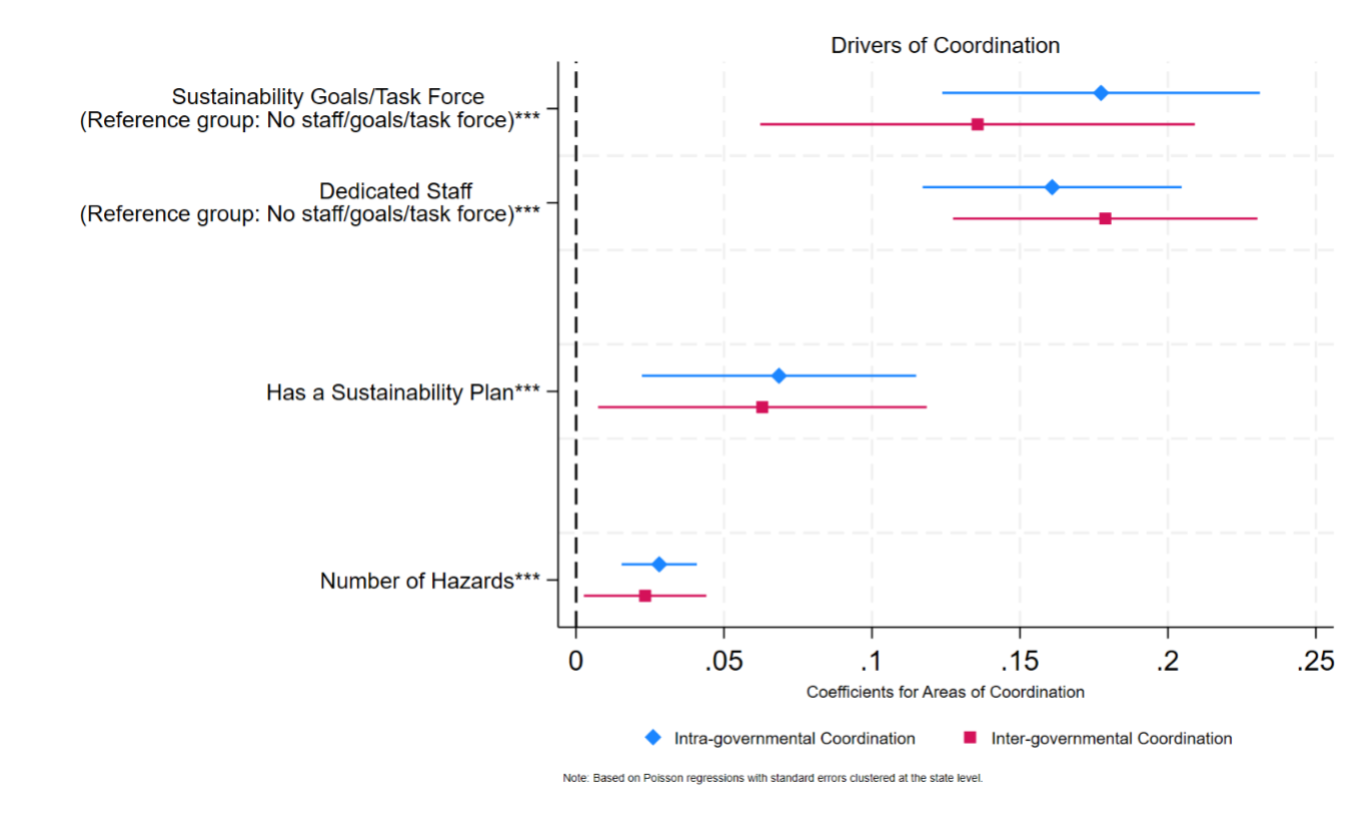
Figure 1: Experience and Capacity as Drivers of Intra- and Inter-governmental Coordination
These results demonstrate the need for more coordination on environmental issues and shed light on the characteristics governments could work to foster. Unfortunately, many local governments remain heavily siloed, both internally and from their peers, especially on environmental subjects. Coordination does not happen enough at the local level. These findings reveal that (1) investing in organizational capacity specifically dedicated to these issues, and (2) finding ways of facilitating retention and transmission of organizational experience, and lessons learned from previous environmental dilemmas, can help make up for these challenges, and support intra- and inter-governmental coordination at the local level.
Dr. Evan M. Mistur is an Assistant Professor of public policy in the Department of Public Affairs and Planning at the University of Texas at Arlington. His research focuses on environmental management and sustainability policy where he studies socio-ecological interaction and a wide range of connected policy topics.
Dr. Anmol Soni is an Assistant Professor in the Department of Public Administration in the E.J. Ourso College of Business at Louisiana State University. Her research focuses on policy design and mixes in climate and sustainability, and energy policy.