Crisis, Violence, and Crime
Tim Weaver, UAR Co-Editor
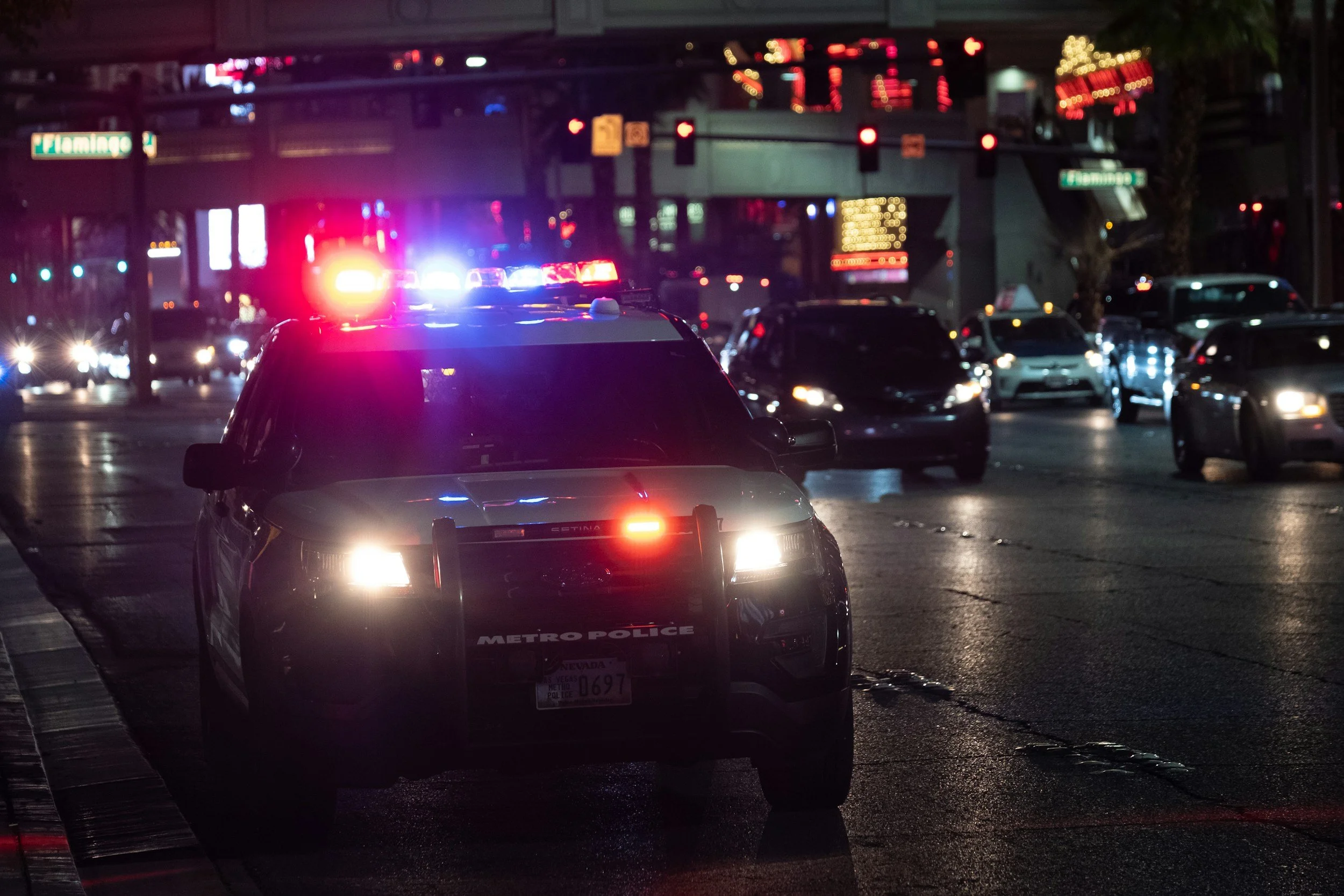
The “urban crisis” concept has been deployed by scholars, commentators, and politicians alike to interpret all manner of urban problems and, critically, to establish warrants for action (Weaver 2017). Though early academic work on the topic dealt principally with mundane issues, such as traffic problems (Vigman 1955), the upheavals of the 1960s soon gave rise to analyses of crises that focused on economic change, racial conflict, disorder, and crime. All these themes enjoy close attention in the four essays highlighted here that span the past half century.
Writing in what was then Urban Affairs Quarterly, Yale political scientist Peter A. Lupsha sought to establish a theory of “urban violence,” in a bid to understand the city riots that were “becoming a common part of life in urban America” (1969, 273). Having found several “folk theories” of urban riots to be wanting, Lupsha advanced the “essential point” that the riots were not simply “products of frustration and deprivation” but reflect black citizens’ deep and rational reaction to the “inability and inadequacy of the political system and its institutions to live up to their promise” (1969, 294). Despite Lupsha’s best efforts, McElroy and Singell suggested a few years later the search for a general theory of urban violence remained elusive (1973, 282). Comparing cities with broad variation in levels of urban rioting, they concluded that “a fully integrated but pluralistically egalitarian society may be the only real deterrent for future urban disorder” (298). Indeed, they predicted that “improvements in the level of education and income may in fact result in more riots unless integration increases simultaneously” (282).
Given the failure of the American political system to make good on its promises (Lupsha’s key concern) or to promote racial integration (McElroy and Singell’s preoccupation), it is something of a puzzle that the intensification of rioting never materialized. As Michael Katz would later argue, the relative absence of conflagration in American cities in the intervening decades is surprising (Katz 2012).
Perhaps one answer to Katz’s question—why don’t American cities burn?—has to do with the rise of the repressive apparatus of policing, surveillance, and confinement that are all reflected in the notion of the “carceral state” (see, for example, Wacquant 2002; Gilmore 2007; Gottschalk 2015; Soss and Weaver 2017). Indeed, a notable feature of work on urban crisis is the shift in emphasis from rioting to crime and disorder. No doubt, this has to do in part with rising urban crime rates. Still, as the articles by Elaine Sharp (2014) and Annika Hinze (2026) illustrate, the expansion of the carceral state is only tangentially connected to actual rates of violent crime. As Hinze puts it in relation to her study comparing rhetoric about crime among presidents and mayors and crime rates, “my findings indicate little to no correlation between political rhetoric on crime and public safety and actual crime incidents” (Hinze 2026, 799).
Sharp’s article on the rise of “order maintenance” policing, which focuses on misdemeanor offenses rather than felonies, also emphasizes an area of critical carceral development that is unmoored from the incidence of serious crime. This form of policing proliferated through American cities in the 1980s and 1990s (Chronopoulos 2020). As with Lupsha and McElroy and Singell, Sharp connects this shift to the political economy: “order maintenance policing is a function of the extent to which a city’s economy is postindustrial, new economy, creative class-oriented” (Sharp 2014, 355). Sharp’s analysis prods urban scholars interested in crisis to probe the question of how intersecting crises shape political development. As she suggests, political actors who sought to promote “creative city” understood this involved major disruption to urban political economies. This in turn created crises of public disorder that the state’s coercive arm sought to counter. As we continue to grapple with the crises that beset our cities, we must continue to attend to the ways neoliberal political economic projects rest upon conservative coercive strategies (Weaver 2025).
References
Chronopoulos, Themis. 2020. “The Making of the Orderly City: New York since the 1980s.” Journal of Urban History 46 (5): 1085–116.
Gilmore, Ruth Wilson. 2007. Golden Gulag: Prisons, Surplus, Crisis, and Opposition in Globalizing California. University of California Press.
Gottschalk, Marie. 2015. Caught: The Prison State and the Lockdown of American Politics. Princeton University Press.
Hinze, Annika Marlen. 2026. “Dangerous City: Territorial Stigmatization, Crime, and Public Safety Political Discourse on Cities.” Urban Affairs Review 62 (3): 751–88. https://doi.org/10.1177/10780874251362736.
Katz, Michael B. 2012. Why Don’t American Cities Burn? University of Pennsylvania Press.
Lupsha, Peter A. 1969. “On Theories of Urban Violence.” Urban Affairs Quarterly 4 (3): 273–96. https://doi.org/10.1177/107808746900400302.
McElroy, Jerome L., and Larry D. Singell. 1973. “Riot and Nonriot Cities: An Examination of Structural Contours.” Urban Affairs Quarterly 8 (3): 281–302. https://doi.org/10.1177/107808747300800302.
Sharp, Elaine B. 2014. “Politics, Economics, and Urban Policing: The Postindustrial City Thesis and Rival Explanations of Heightened Order Maintenance Policing.” Urban Affairs Review 50 (3): 340–65. https://doi.org/10.1177/1078087413490397.
Soss, Joe, and Vesla Weaver. 2017. “Police Are Our Government: Politics, Political Science, and the Policing of Race–Class Subjugated Communities.” Annual Review of Political Science 20 (1): 565–91. https://doi.org/10.1146/annurev-polisci-060415-093825.
Vigman, Fred K. 1955. Crisis of the cities. Public Affairs Press.
Wacquant, Loic. 2002. “From Slavery to Mass Incarceration.” New Left Review, II, no. 13: 41–60.
Weaver, Timothy P. R. 2017. “Urban Crisis: The Genealogy of a Concept.” Urban Studies 54 (9): 2039–55.
Weaver, Timothy P. R. 2025. Inequality, Crime, and Resistance in New York City. First edition. Temple University Press.