Goodbye to All That: The Rise, Dominance, and Decline of Machine Politics in Chicago
Larry Bennett (DePaul University)
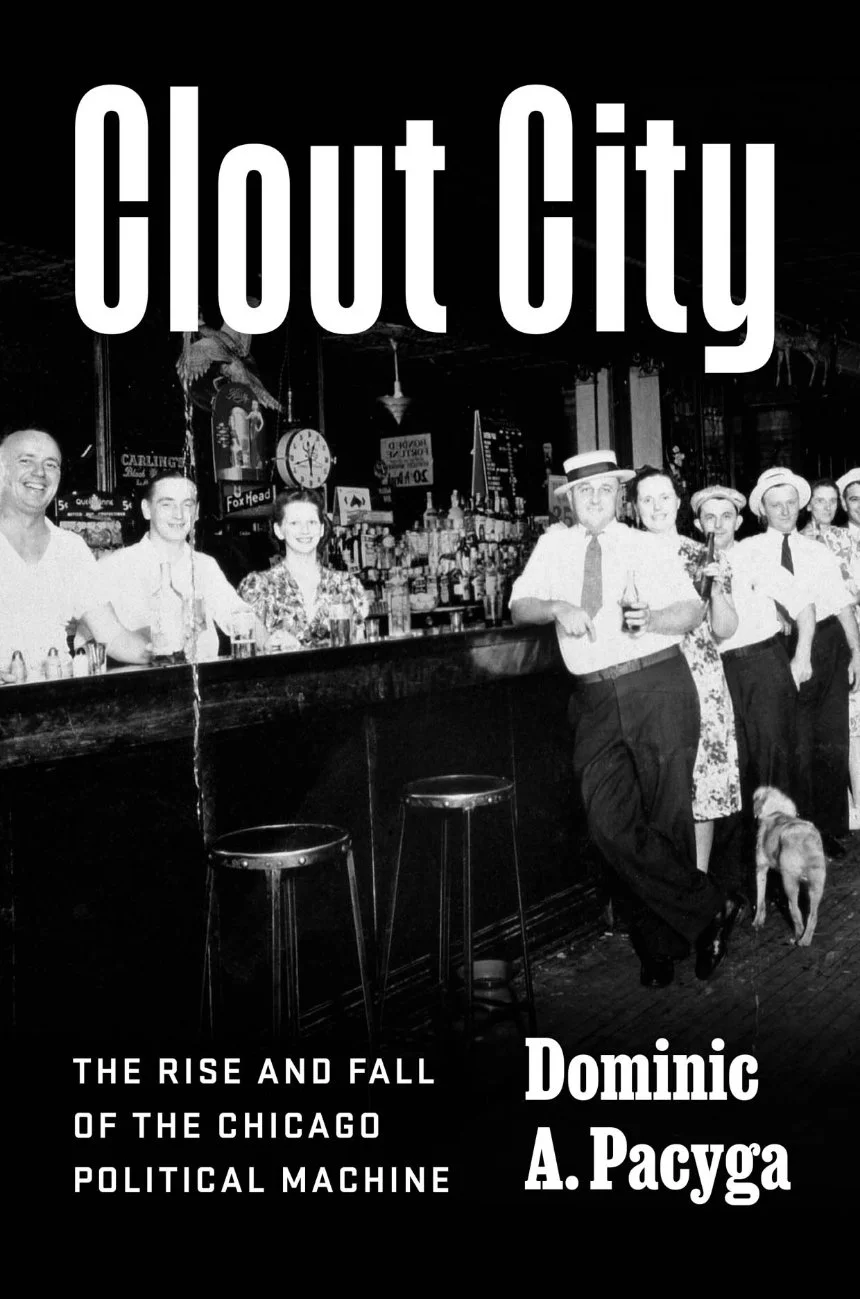
Dominic Pacyga is a distinguished urban historian whose books include American Warsaw: The Rise, Fall, and Rebirth of Polish Chicago and Slaughterhouse: Chicago’s Union Stock Yard and the World It Made. The publication of Clout City: The Rise and Fall of the Chicago Political Machine, even had the book represented a synthesis of existing Chicago scholarship, would have been an important addition to the literature on Chicago politics. In fact, with Clout City Pacyga offers a distinctive, culturally grounded explanation of how the Cook County Democratic Party came to dominate Chicago politics. In a nutshell, Pacyga’s argument is that Catholic, working-class neighborhood culture was the magic sauce producing the sequence of Cermak, Kelly/Nash, and Daley machines that ruled Chicago from the 1930s into the 1970s. In Pacyga’s view, that Catholic, working-class neighborhood culture persisted in Chicago for a long century running from the post-Civil War era into the 1970s or 1980s, but it no longer represents a crucial shaper of the city’s political elites and governmental institutions. And as Catholic, working-class neighborhoodism waned (not least due to suburbanization), so too did the dominant Democratic Party organization.
“Goodbye to All That: The Rise, Dominance, and Decline of Machine Politics in Chicago” is a response to Pacyga’s magnificent book, at once a summary of the book’s main line of analysis, an elaboration of that analysis by relating it to the long arc of academic machine politics commentary, and a meditation on one of Pacyga’s subthemes, the transformation of American urban neighborhoods since the mid-twentieth century. The greatest virtue of Pacyga’s account is the rich detail he brings to his discussion of particular politicians, the workings of institutions both inside and outside Chicago city government, and the various crisis points both confronted and generated by the Cook Country Democrats. The reader of Clout City will get a better feel for politics on the ground in Chicago than from virtually any other scholarly study of the city. In this sense Clout City’s peer publications are classic journalistic accounts such as Mike Royko’s Clout and Gary Rivlin’s Fire on the Prairie. This is distinguished company.
What can a review essay add to the above? In “Goodbye to All That: The Rise, Dominance, and Decline of Machine Politics in Chicago” I discuss the parallels between Pacyga’s Chicago-focused account and the more general scholarly literature on political machines penned by distinguished scholars such as Robert Merton, Theodore Lowi, and Raymond Wolfinger. Interestingly—in my reading of his book—Pacyga’s presentation is less closely aligned with the more materialistic scholarship on machine politics offered by political scientists such as Steven Erie and Jessica Trounstine. I will note, however, that this seeming discordance may be a function of Pacyga’s unwavering focus on politics in Chicago. Fully aware that variants of machine politics appeared in many late-nineteenth and early twentieth century U.S. cities, Pacyga has written a book that tracks the rise and fall of machine politics in just one city. As such, this is not a book that dwells on topics such as the shifting relationship between municipalities and the federal government or the winding down of federal fiscal support for cities since the mid-twentieth century.
In a brief coda to the main body of my essay, I note the remarkable upsurge of neighborhood-level resistance in 2025 and early 2026 to the Department of Homeland Security’s invasion of cities such as Los Angeles, Minneapolis-St. Paul, and Chicago. Though the particular variety of “neighborhood communalism” that yielded durable political formations such the Chicago Democratic Party’s ward organizations—and which is quietly celebrated by Dominic Pacyga—may have passed, might not these recent, unanticipated rallies of communal activism be the harbingers of a new era (and form) of urban neighborhood consciousness and inclusivity?
Larry Bennett is professor emeritus of Political Science at DePaul University. He is author of Reclaiming Modernity: Essays on a Paradoxical Nostalgia (Univ. of Illinois Press) and co-editor (with Alba Alexander, Evan McKenzie, and Michael A. Pagano) of Unwinding Privatization: Cities and the Restoration of Public Power (MIT Press).