Homelessness as America’s “New Urban Crisis”
Yetimoni Kpeebi (University of North Carolina, Charlotte)
Introduction
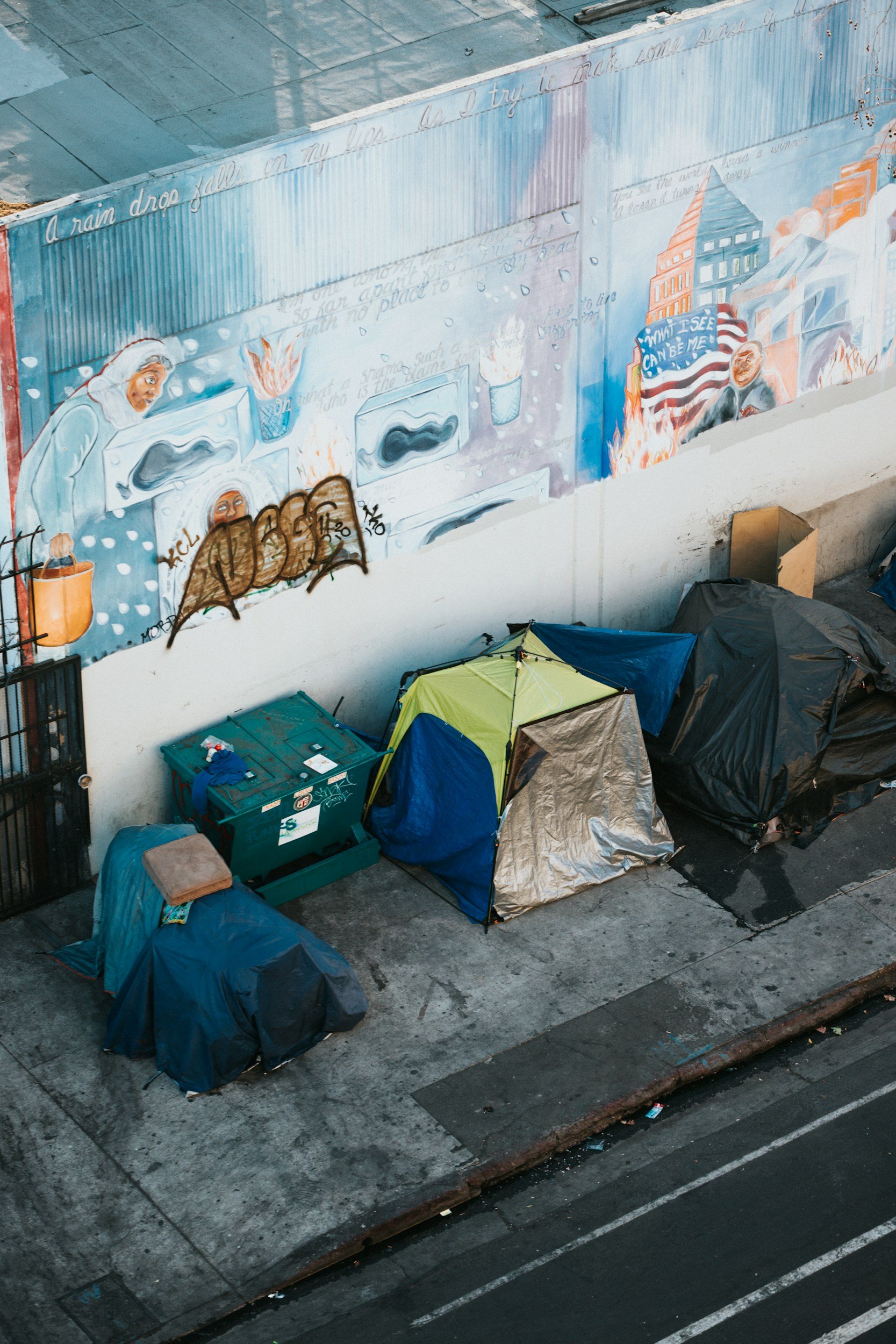
Homelessness has emerged as one of the most visible and contested urban challenges in the U.S. Over the past few years, heightened public attention and policy interventions have brought homelessness to the center of urban discourse, particularly in major U.S cities. A cursory review of major academic databases reveals a growing body of scholarship examining homelessness from policy, planning, legal, and governance perspectives (e.g Einstein and Willison 2025; Viljoen 2025; Nice 2026; Farkas et al. 2025; Le and Rew 2025; Kim et al. 2025; Okara 2025). This growing scholarly attention reflects the scale and urgency of the issue, as homelessness has reached unprecedented levels. On any given night, it is estimated that more than 770,000[1] people experience homelessness in the U.S., the highest figure recorded in decades (U.S. Department of Housing and Urban Development 2024). While these numbers point to a deepening crisis, the heightened visibility of homelessness in urban spaces has also intensified public demand for punitive responses.
Homelessness is widely understood as the product of intersecting individual vulnerabilities and structural forces, including mental health conditions, substance use, welfare retrenchment, and labor market instability (Farkas et al. 2025; Goldshear et al. 2025; Fazel et al. 2014). Scholarly consensus, however, increasingly points to housing affordability and availability as the primary determinants of homelessness outcomes (Colburn and Aldern 2022; Hanratty 2017; Bailey et al. 2024; Adams et al. 2023; Bailey et al. 2020; Byrne et al. 2013; Hanson and Toro 2020).
These structural drivers do not operate in isolation. The opioid epidemic has compounded housing instability by leaving many individuals without adequate access to treatment or supportive housing (Pollack et al. 2022; Strach et al. 2020; Kelly et al. 2025), while the COVID-19 pandemic disrupted social services and eroded the informal safety nets that once kept many precarious households from falling into homelessness (Rodriguez et al. 2022; Baral et al. 2021). Yet, policymakers continue to rely on “strong-armed” forms of urban governance that prioritize policing and the regulation of public space over housing-centered solutions (Herring 2019; Kpeebi and Evans 2025c). These approaches have not only failed to reduce homelessness but have normalized the criminalization of unhoused individuals in public space (Colburn et al. 2025). Such criminalization has now found legal sanction at the highest level. In City ofGrants Pass v. Johnson (2024), the U.S. Supreme Court held that cities may penalize unhoused individuals for sleeping in public spaces even where no adequate shelter exists. The ruling has since lent judicial authority to the encampment bans, anti-camping ordinances, and expanded arrest powers increasingly deployed against the unhoused across U.S. cities.
In recent years, homelessness has been treated less as a housing crisis and more as a public order problem. This reframing has supported punitive responses in several major U.S. cities, including the deployment of state and National Guard personnel in encampment removals framed as efforts to maintain order in public space. At the same time, decision-making processes surrounding homelessness often involve limited participation from the unhoused. This reflects what Arnstein (1969) describes as tokenistic engagement on the lower rungs of the ladder of participation. I argue that the failure to incorporate diverse voices in homelessness governance is part of what constitutes the contemporary urban crisis surrounding homelessness. While existing evidence confirms that homelessness has reached crisis levels in the U.S. (U.S. Department of Housing and Urban Development 2024), its contemporary manifestations closely align with earlier conceptualizations of urban crisis advanced by scholars such as Vigman (1955). Building on urban crisis scholarship, this commentary advances an interpretation of homelessness as America’s new urban crisis. I argue that homelessness now exhibits the core features historically associated with urban crises, including structural production, spatial management, and the expansion of punitive governance mechanisms.
Homelessness as the new urban crisis: a historical overview
The concept of urban crisis holds a long-standing and, by some accounts, deepening centrality within critical urban thought and practice (Weaver 2017; McFarlane 2026). Early conceptualizations of the term emerged in the 1950s and were grounded largely in structural and materialist understandings of urban change. Within a liberal policy framework, early scholars interpreted the urban crisis as a set of tangible city problems, including slum housing, inadequate municipal services, and the challenges associated with suburban decentralization, all of which were viewed as amenable to government intervention (Vigman 1955; Beauregard 2003). These early definitions framed urban crisis as the outcome of identifiable urban conditions that could be corrected through public policy, particularly through investments in housing, infrastructure, and urban renewal.
The meaning of urban crisis, however, evolved over time. By the 1960s and 1970s, particularly in the U.S, the term gained prominence as scholars and policymakers sought to make sense of deepening fiscal crises, racial segregation, deindustrialization, and widespread disinvestment in central cities (Harvey, 1973; Mollenkopf, 1983). During this period, urban crisis came to be understood not only as a product of economic change, but also as a governance issue shaped by political decisions, regulatory frameworks, and institutional practices.
I concur with both the early and later conceptualizations of urban crisis for two key reasons. First, homelessness reflects material and structural failures that are, in principle, solvable through deliberate public intervention. Second, homelessness simultaneously constitutes a crisis of governance. The scale and persistence of homelessness cannot be explained by market dynamics alone. Rather, they are shaped by political decisions, institutional fragmentation, and regulatory choices that structure how housing is financed, where shelters are permitted, and how unhoused populations are governed within urban space. These governance failures have long been recognized within the literature. As Shlay and Rossi (1992, p. 1) argue, “policies designed to ameliorate homelessness have been inadequate to stem the tidal forces that produce such severe destitution, and this trend is likely to continue.” If homelessness persists despite decades of intervention, what makes its current manifestation a new urban crisis in the U.S.? The analysis that follows reflects on this question.
Building on the later conceptualization of urban crisis, I argue that homelessness in contemporary American cities reflects what can be understood as the new urban crisis. I discuss these dynamics through two analytical lenses. The first is the unprecedented scale of homelessness observed in recent years. The second is the intensity of enforcement-based responses deployed to address the issue despite decades of evidence demonstrating that housing-centered interventions remain the only effective solution to homelessness. While my core argument is grounded in the later theorization of urban crisis, I do not seek to dismiss or critique the early conceptualization of the term. Rather, the later framework provides the primary lens through which I interpret homelessness as a condition of governance. At the same time, the normative implications of my argument draw directly from the insights of early urban crisis scholars, particularly their emphasis on sustained public investment as a necessary response to conditions of urban breakdown. In this sense, the call for renewed investment in housing aligns closely with the foundational logics advanced in earlier urban crisis scholarship. It is within this analytical frame that the contemporary homelessness crisis can be more fully understood.
The contemporary crisis of homelessness: punitive governance, institutional failure, and the case for reform
In many U.S. cities, homelessness unfolds through fragmented governance structures that separate housing, health, social services, and emergency management across multiple agencies and levels of government (Murphy 2009). Within these fragmented systems, homelessness has increasingly become an object of urban regulation rather than housing provision. In recent years, both federal and local governments have relied more heavily on punitive measures, including encampment sweeps and behavioral restrictions, to manage the visibility of homelessness in public space (Rankin 2021). A clear illustration of this shift is the 2024 Supreme Court decision in City of Grants Pass v. Johnson, which affirmed the authority of cities to penalize unhoused individuals for sleeping or camping in public spaces, even in the absence of adequate shelter alternatives (Kpeebi and Evans 2025c).
Although courts have influenced homelessness policy in the past, their role has generally been to limit punitive enforcement. For example, the Ninth Circuit’s decision in Martin v. City of Boise (2018) held that cities could not criminalize sleeping in public when adequate shelter was unavailable. The Supreme Court's 2024 ruling in City of Grants Pass v. Johnson reversed that protective logic, removing a key legal constraint on the criminalization of homelessness. Following the ruling, several cities moved quickly to strengthen or reinstate anti-camping ordinances, expand enforcement powers, and increase the frequency of encampment removals (Sequeira 2025). Since the decision, nearly 220 local ordinances have been enacted nationwide that restrict or prohibit activities such as sleeping, sitting, or panhandling in public spaces, including in cities such as Phoenix, Gainesville, and Reno (Przybylinski 2025). In San Francisco, city leadership adopted a more punitive enforcement posture toward encampments following the ruling (Grether 2025), with arrests for individuals sleeping in encampments increasing nearly tenfold within a year, despite an unhoused population of approximately 8,300 (Przybylinski 2025). Survey evidence further indicates widespread displacement and criminalization, with many unhoused individuals reporting forced removals, citations, or arrests related to lodging and trespassing, often without access to adequate alternative space (Przybylinski 2025). At the same time, reductions and constraints in funding for housing programs have limited the expansion of permanent housing solutions, further defining the current crisis. What appears new about the present crisis, as I argue, is not the existence of homelessness itself, but the scale at which enforcement and criminalization have become normalized policy tools, even as the structural drivers of housing insecurity remain largely unaddressed (Colburn et al. 2025).
These developments are consistent with the later conceptualization of urban crisis, in which crisis is produced through governance failures rather than physical deterioration alone. As Mitchell (2003, p. 9) argues, struggles for social justice in the city must seek to establish “a different kind of order… built not on the fears of the bourgeoisie but on the needs of the poorest and most marginalized residents.” I concur with this view. The turn toward enforcement in the absence of housing alternatives illustrates how homelessness is rendered visible, regulated, and displaced rather than substantively resolved. In some instances, this governance approach has also been deployed by the federal government. For example, in August 2025, the Trump administration deployed more than 2,200 National Guard troops in Washington, D.C., under a declared “crime emergency” and directed the dismantling of homeless encampments as part of a “beautification” initiative (Gedeon 2025). Reports indicate that troops cleared encampments, removed tents, collected debris, and assisted in the physical reconfiguration of public spaces. These developments point toward a crisis condition within contemporary homelessness governance.
Bateman and Hochman (1971) posit that America’s urban crisis is, at its core, a crisis of distributive justice. They locate its roots in systemic inequalities in income, wealth, and opportunity, compounded by institutional structures that perpetuate these disparities. They contend that meaningful resolution requires broad moral and constitutional reforms designed to realign societal interests, promote fairness, and mitigate the destructive externalities of inequality, including crime and social fragmentation. I agree with and extend their argument by proposing that homelessness constitutes a direct and acute manifestation of structural distributive injustice and institutional failure. It represents the logical outcome of a system that unevenly allocates resources while failing to guarantee basic social and economic rights. Addressing homelessness, therefore requires systemic intervention through public policies that reform the rules governing resource distribution, property regimes, and social entitlements.
Echoing other scholars, I argue that a sustainable resolution to homelessness, as a defining dimension of the contemporary urban crisis, depends on the deliberate construction of a more just society. This entails moving beyond stopgap responses toward institutional reforms that explicitly recognize and meet the rights and needs of disadvantaged populations. Central to this agenda, even as it has been relegated to the background in recent policy turns, is the embedding of housing-first principles in local plans and zoning codes, alongside the expansion of non-market and deeply affordable housing, the design of participatory processes that meaningfully include unhoused residents, the redirection of enforcement budgets toward care infrastructure, and the integration of climate resilience into homelessness planning. Recent scholarship also points to emerging housing responses such as tiny house villages (Evans 2020; Kpeebi and Evans 2025a; Kpeebi and Evans 2025b), conceptualized as quasi-formal housing, which provide low-cost, community-based shelter while expanding dignity and stability for unhoused residents (Kpeebi and Evans 2026).
Conclusion: Toward a justice-centered urban future
This essay has framed homelessness in the U.S as the new urban crisis. Reading homelessness through the urban crisis literature, I have shown that it exhibits three defining features. Its causes are primarily structural, rooted in housing and labor market dynamics, although individual factors such as substance use, mental illness, and family instability also shape the specific pathways through which it is experienced. Its persistence reflects the breakdown of public systems meant to guarantee basic social needs. And the policy responses it generates prioritize the management of public space over the housing and institutional reforms needed to resolve it. In recent years, U.S. cities have intensified the criminalization of homelessness following the Supreme Court’s ruling in City of Grants Pass v. Johnson alongside cuts to permanent housing funding and a brutal clearing of homeless encampments. Yet, for all the legal machinery, budgetary reallocation, and military deployment brought to bear, homelessness in the U.S has not abated.
The persistence of homelessness after decades of intervention suggests that the problem is not a lack of knowledge about what works, but a failure to act on that knowledge. I argue that cities already know how to reduce homelessness: A large body of evidence shows that housing-centered approaches are more effective, more humane, and more cost-efficient than enforcement-based strategies. Addressing homelessness in American cities requires reorienting urban governance away from punishment and toward housing-centered solutions. This shift begins with dismantling policies that criminalize homelessness in the first place. For housing-centered solutions to truly take hold, the punitive apparatus that criminalizes the very condition they seek to address must be dismantled—decriminalization, as Kpeebi and Evans (2025c) argue, is where any serious policy agenda must begin. Without such shifts, homelessness will continue to be a managed crisis, reproduced through policy choices that stabilize inequality rather than dismantle it. Recognizing homelessness as an urban crisis, therefore, is a call to re-examine the policies and governance practices that shape how cities respond to homelessness. Every effort aimed at addressing homelessness in a more humane and constructive manner should be encouraged.
Notes
[1] This figure is based on HUD’s annual Point-in-Time (PIT) estimate, which measures homelessness on a single night in January and is widely used despite debates about undercounting, particularly among unsheltered populations.
References
Adams, E. A., M. R. J. Aquino, V. Bartle, K. Brennan-Tovey, J. Kennedy, S. Koehne, and S. E. Ramsay. 2023. "International Evidence on Lived Experiences of Trauma during Homelessness and Effects on Mental Health Including Substance Use: A Co-Produced Qualitative Systematic Review." The Lancet 402: S18.
Bailey, A., P. Bailey, and E. Gartland. 2024. "Policymakers Can Solve Homelessness by Scaling Up Proven Solutions: Rental Assistance and Supportive Services." Washington, DC: Center on Budget and Policy Priorities.
Bailey, M., E. Crew, and R. Madz. 2020. "No Access to Justice: Breaking the Cycle of Homelessness and Jail." New York: Vera Institute of Justice. homelessness-brief-web.pdf
Baker, T., and J. Evans. 2016. "Housing First and the Changing Terrains of Homeless Governance." Geography Compass 10 (1): 25–41.
Baral, S., A. Bond, A. Boozary, E. Bruketa, N. Elmi, D. Freiheit, and A. Zhu. 2021. "Seeking Shelter: Homelessness and COVID-19." Facets 6 (1): 925–958.
Bateman, W., and H. M. Hochman. 1971. "Social Problems and the Urban Crisis: Can Public Policy Make a Difference?" American Economic Review 61 (2): 346–353.
Batterham, D. 2019. "Defining 'At-Risk of Homelessness': Re-Connecting Causes, Mechanisms and Risk." Housing, Theory and Society 36 (1): 1–24. https://doi.org/10.1080/14036096.2017.1408678.
Byrne, T., E. A. Munley, J. D. Fargo, A. E. Montgomery, and D. P. Culhane. 2013. "New Perspectives on Community-Level Determinants of Homelessness." Journal of Urban Affairs 35 (5): 607–625. https://doi.org/10.1111/j.1467-9906.2012.00643.x.
Colburn, G., and C. P. Aldern. 2022. Homelessness Is a Housing Problem: How Structural Factors Explain US Patterns. Berkeley: University of California Press.
Colburn, G., M. Shinn, S. Batko, M. Galvez, and M. Kushel. 2025. "What Would It Take to End Homelessness in the United States?" Housing Policy Debate 35 (3): 569–582. https://doi.org/10.1080/10511482.2025.2479469.
Einstein, K. L., and C. E. Willison. 2025. "Planning for Homelessness: Land Use Policy, Housing Markets, and Cities' Homelessness Responses." Urban Affairs Review 61 (2): 375–405.
Evans, K. 2020. "Tackling Homelessness with Tiny Houses: An Inventory of Tiny House Villages in the United States." The Professional Geographer 72 (3): 360–370.
Farkas, K. J., J. R. Romaniuk, and M. Baranowski. 2025. "Beyond Housing First: Rethinking Neoliberal Policies Impacting Homelessness." Journal of Public Health Policy 46 (1): 180–192.
Fazel, S., J. R. Geddes, and M. Kushel. 2014. "The Health of Homeless People in High-Income Countries: Descriptive Epidemiology, Health Consequences, and Clinical and Policy Recommendations." The Lancet 384 (9953): 1529–1540.
Gedeon, J. 2025. "National Guard Troops Deployed in DC Rake Leaves and Clear Homeless Camps." The Guardian, August 27, 2025. Accessed May 12, 2026. https://www.theguardian.com/us-news/2025/aug/27/trump-national-guard-beautification-dc
Goldshear, J. L., T. K. Reuter, R. N. Bluthenthal, and A. Borquez. 2025. "Displacement, Health Outcomes, and the Human Rights of People Experiencing Homelessness in the USA." The Lancet Public Health 10 (10): e874–e878.
Grether, M. 2025. "San Francisco Has Embraced a New Tool to Clear Homeless Camps." Wall Street Journal. Accessed May 12, 2026. https://www.wsj.com/us-news/san-francisco-has-embraced-a-new-tool-to-clear-homeless-camps-528d3110.
Hanratty, M. 2017. "Do Local Economic Conditions Affect Homelessness? Impact of Area Housing Market Factors, Unemployment, and Poverty on Community Homeless Rates." Housing Policy Debate 27 (4): 640–655.
Hanson, D. M., and P. A. Toro. 2020. "Contributions of Community Psychologists to Research, Theory, Intervention, and Policy on Homelessness since 1980." Journal of Urban Affairs 42 (5): 750–764. https://doi.org/10.1080/07352166.2019.1645571.
Herring, C. 2019. "Complaint-Oriented Policing: Regulating Homelessness in Public Space." American Sociological Review 84 (5): 769–800.
Kelly, L., G. M. Hindmarch, K. E. Watkins, C. M. McCullough, B. A. Griffin, L. S. Meredith, S. Mendon-Plasek, M. Komaromy, and S. B. Hunter. 2025. "Association between Housing Status and Mental Health and Substance Use Severity among Individuals with Opioid Use Disorder and Co-Occurring Depression and/or PTSD." BMC Primary Care 26 (1): 250.
Kim, S., H. Kwak, E. Nwakpuda, A. Sullivan, and V. M. Fenley. 2025. "Social Equity for Wicked Problems: Achieving Racial Equity in Homeless Service Provision." Public Management Review 27 (2): 395–427.
Kpeebi, Y., and K. Evans. 2025a. "Geography of Tiny House Villages for the Homeless (Revisited): Implications for Planning and Policy in the United States." Journal of Housing and the Built Environment 40 (3): 1127–1145.
Kpeebi, Y., and K. Evans. 2025b. "Understanding the Spatial Distribution of Tiny House Villages for the Homeless and the Contextual Factors Underlying Their Establishment in the United States." GeoJournal 90 (1): 20.
Kpeebi, Y., and K. Evans. 2025c. "The Grants Pass v. Johnson Ruling: Decriminalizing Homelessness Is the First Step in Solving America's Housing Crisis." Journal of the American Planning Association, 1–7.
Kpeebi, Y., and K. Evans. 2026. "'Quasi-Formal Housing' in the United States: Rethinking Tiny House Villages as a Response to Housing Insecurity." Journal of Planning Education and Research 0739456X251401517.
Le, H., and L. Rew. 2025. "Youth-Centered Recommendations to Address Social Stigma and Discrimination against Unhoused Youth: An Integrative Literature Review." The Journal of School Nursing 41 (1): 36–55.
McFarlane, C. 2026. "Urban Geography II: Crisis-Thinking and Critical Urbanism." Progress in Human Geography 03091325261435173.
Mitchell, D. 2003. The Right to the City: Social Justice and the Fight for Public Space. New York: Guilford Press.
Murphy, S. 2009. "'Compassionate' Strategies of Managing Homelessness: Post-Revanchist Geographies in San Francisco." Antipode 41 (2): 305–325.
Nice, J. A. 2026. "The Irrationality of Punishing Homelessness." Santa Clara Law Review 66 (1): 1–.
Okara, G. C. 2025. "Criminalising Rough Sleeping in England and Wales: Way Forward or Backward? Possible Solutions to Homelessness." International Journal of Housing Policy. Advance online publication, 1–23.
Pollack, C. E., B. Saloner, S. Lucas, E. Warren, M. Chaubal, and A. Kennedy-Hendricks. 2022. "Leveraging the Affordable Housing Sector to Respond to the Opioid Crisis." Public Health Reports 137 (3): 414–419.
Przybylinski, S. 2025. "San Francisco and Other Cities, Following a Supreme Court Ruling, Are Arresting More Homeless People for Living on the Streets." The Conversation. Accessed May 12, 2026. https://theconversation.com/san-francisco-and-other-cities-following-a-supreme-court-ruling-are-arresting-more-homeless-people-for-living-on-the-streets-262664.
Rankin, S. K. 2021. "Hiding Homelessness." California Law Review 109 (2): 559–613.
Rodriguez, N. M., R. G. Martinez, R. Ziolkowski, C. Tolliver, H. Young, and Y. Ruiz. 2022. "'COVID Knocked Me Straight into the Dirt': Perspectives from People Experiencing Homelessness on the Impacts of the COVID-19 Pandemic." BMC Public Health 22 (1): 1327.
Sequeira, R. 2025. "Many More Cities Ban Sleeping Outside Despite a Lack of Shelter Space." Stateline. Accessed January 26, 2026. https://stateline.org
Shlay, A. B., and P. H. Rossi. 1992. "Social Science Research and Contemporary Studies of Homelessness." Annual Review of Sociology 18 (1): 129–160.
Strach, P., K. Zuber, and E. Pérez-Chiqués. 2020. "Why Policies Fail: The Illusion of Services in the Opioid Epidemic." Journal of Health Politics, Policy and Law 45 (2): 341–364.
U.S. Department of Housing and Urban Development. 2024. The 2024 Annual Homeless Assessment Report (AHAR) to Congress. https://www.huduser.gov/portal/sites/default/files/pdf/2024-AHAR-Part-1.pdf.
Vigman, F. K. 1955. Crisis of the Cities. Washington, DC: Public Affairs Press.
Viljoen, S. M. 2025. "Regulating Public Property: The Account of the Homeless." Social and Legal Studies 34 (3): 439–457.
Weaver, T. 2017. "Urban Crisis: The Genealogy of a Concept." Urban Studies 54 (9): 2039–2055.
Yetimoni Kpeebi is a Ph.D. student in Geography at the University of North Carolina at Charlotte (UNC Charlotte). His research focuses on homelessness and climate disasters, building directly on his prior works on tiny house villages as a response to America’s housing crisis.