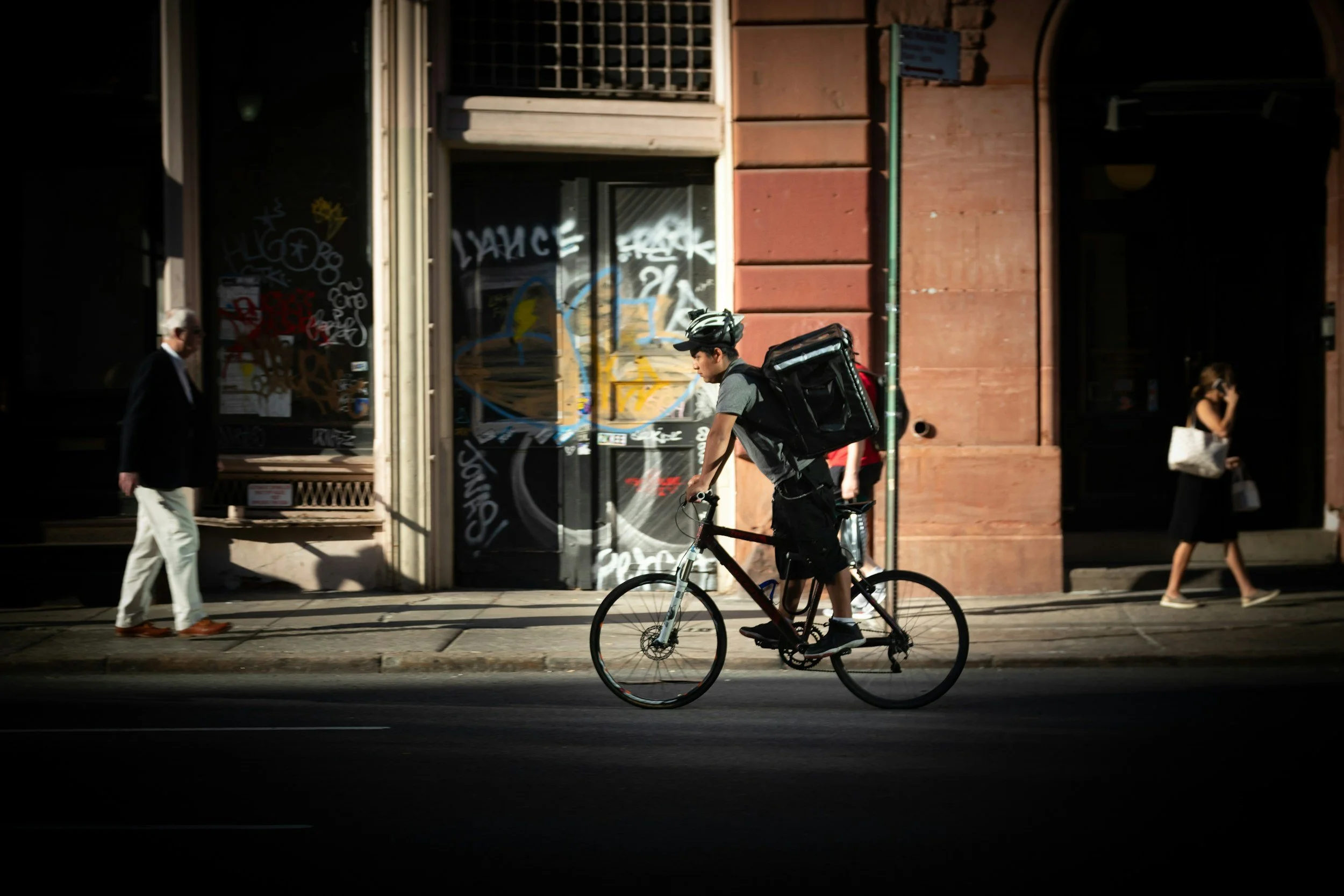
Delivering the New Urban Crisis
By Isaac Oates (CUNY Graduate Center)
New York City’s 2021 legislation establishing minimum pay for app-based food delivery workers represents a significant recent effort to protect gig workers. This essay argues that the legislation is counterproductive: by raising pay without reclassifying workers as employees, it gave delivery platforms an incentive to extract more output per worker hour, shifting the cost of higher wages back onto workers in the form of greater strain and risk. Drawing on data reported by delivery platforms to the city under the 2021 legislation, the essay shows that between the second half of 2023 and the second half of 2024, deliveries per worker hour rose 75% while consumer spending per delivery stayed flat and platform gross profit per delivery fell only modestly, suggesting that workers absorbed the bulk of the mandate’s cost. The essay situates these findings within Richard Florida’s framework of the new urban crisis, arguing that Florida’s prescription of converting low-wage service jobs into family-supporting work cannot be achieved through wage protection alone when the underlying power asymmetry between platforms and workers remains intact. The New York case is not exceptional: platform companies have pursued analogous arrangements in California and other states, and a proposed 2026 federal rule would make independent contractor classification easier nationally. For this class of worker, the new urban crisis is not a failure of policy ambition, but a predictable feature of how platform labor markets distribute power.
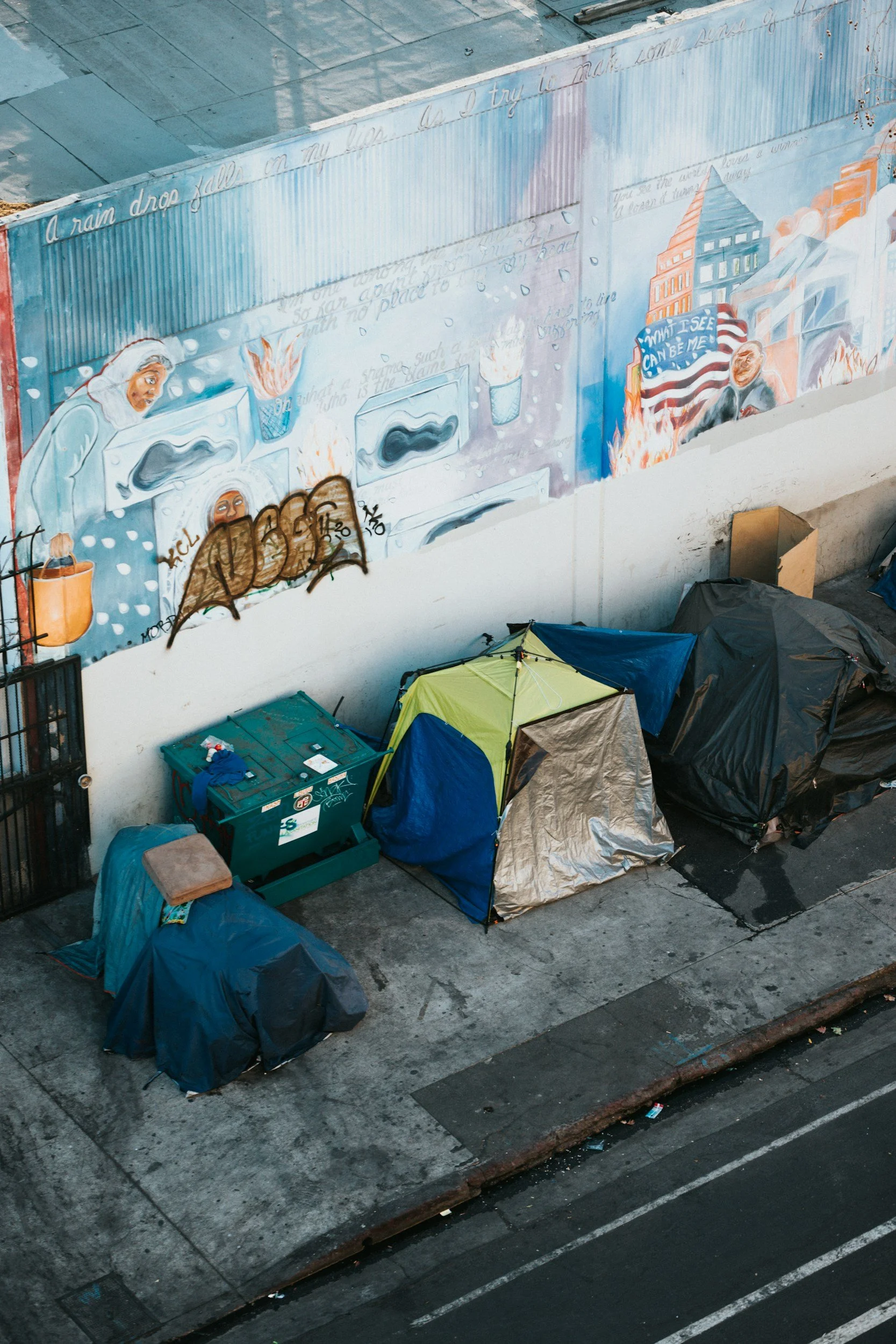
Homelessness as America’s “New Urban Crisis”
By Yetimoni Kpeebi (UNC Charlotte)
Homelessness in the United States has reached its highest recorded level in decades, yet governance responses remain overwhelmingly punitive. Drawing on critical urban theory, this essay frames homelessness as America's “new urban crisis.” By exploring the unprecedented scale of homelessness and the intensification of punitive governance, this essay shows that homelessness has shifted from a temporary social emergency to a normalized mode of urban governance in contemporary American cities. I conclude by arguing for a decisive shift away from punitive governance and toward housing-centered solutions grounded in the rights and dignity of the unhoused.