
Invisible Debt and the New Urban Crisis
By Ang Liu (Rutgers University–Newark)
While urban crises are often understood through visible symptoms such as housing unaffordability, segregation, and infrastructure decline, the financial arrangements that sustain these conditions are easier to overlook. This paper explores the concept of invisible debt—debt displaced into separate entities, off-balance-sheet arrangements, and future revenue claims outside the core municipal budget. Drawing on comparative cases from Chicago, São Paulo, Dubai, and Chengdu, it shows that these arrangements differ across institutional settings but share a broader logic of fiscal displacement. Cities reorganize debt through quasi-public authorities, public-private partnerships, state-linked developers, and local government financing vehicles (LGFVs). Ultimately, the contemporary urban crisis is characterized by the extent to which fiscal strain is deferred and fragmented, keeping immediate financial pressure out of sight while allowing deeper, long-term vulnerabilities to accumulate. The true vulnerability of the city remains off the books until the moment of reckoning.
“The City Has Completely Turned Its Back On Us”
By Michele McLaughlin-Zamora (UCSB)
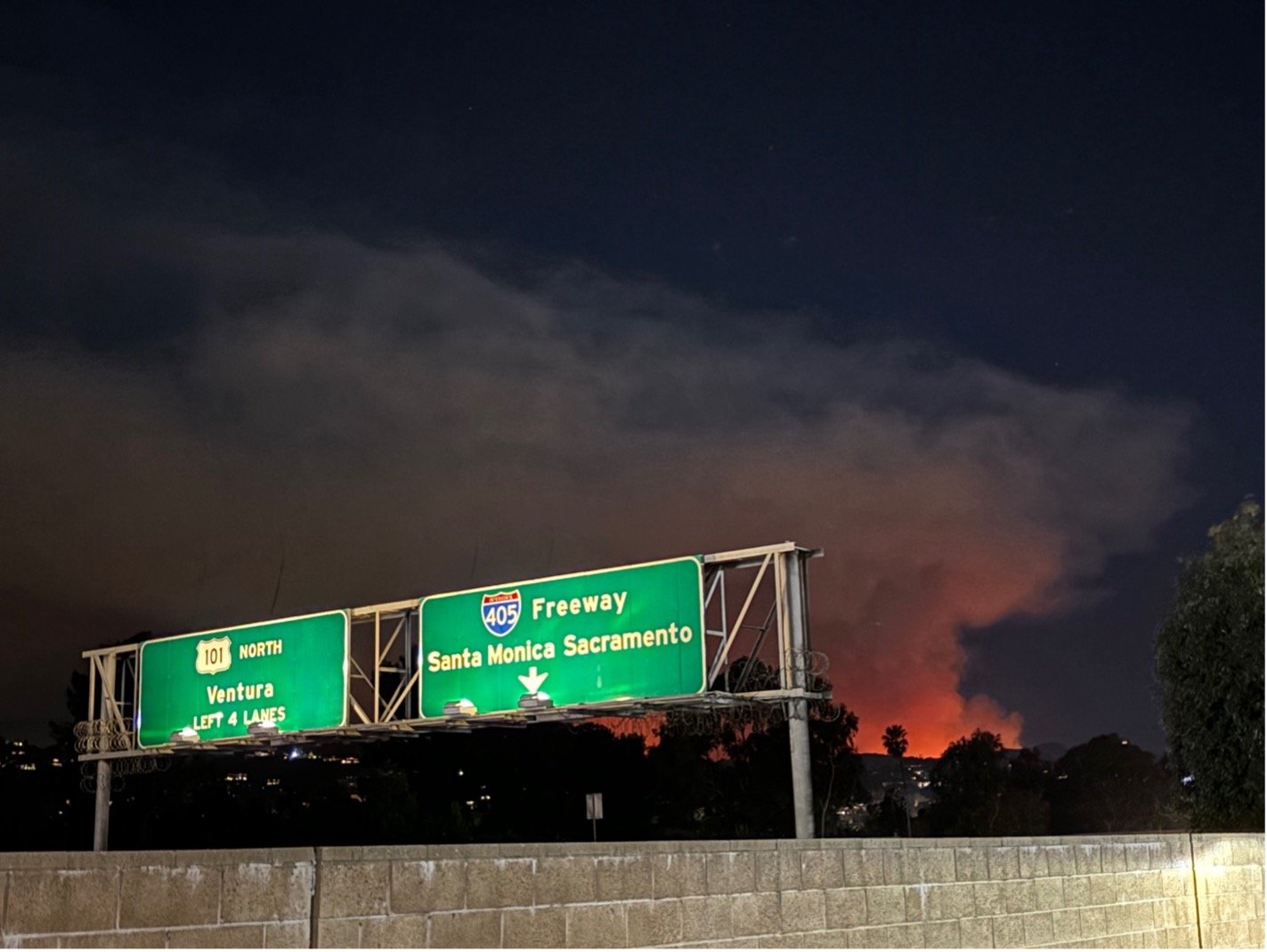
Los Angeles mutual aid networks (LAMAs) stepped up to provide critical aid and resources to the most vulnerable communities during and after the January 2025 wildfire crises and in the wake of extreme institutional failure. As this catastrophic climate crisis unfolded, cross-community direct action mobilized at an unprecedented scale to meet a wide array of everyday needs. Despite strong, vibrant, ethnoculturally focused political communities, regional power building has struggled to find wide roots. However, as the crises escalated, typically siloed communities united while institutions and elected officials made fundamentally flawed decisions, further endangering Angelenos in dire times of need. These governing failures are not a one-off case of crisis fumbling but indicative of L.A.’s intentionally diffuse governing landscape and historically racialized structure of policy and practice, roots of the ongoing urban crises. One year following the wildfires, LAMAs are in the process of building regional socio-political capacity in light of ongoing institutional insufficiencies and escalating polycrises, engaging in a grassroots “politics of refusal” and often on the front defensive line against the active rise in national authoritarianism. Within a critical environmental justice framework, critical political ethnography and digital ethnography help to explore the evolving regional community organizing power and political influence of LAMA hubs and their potential to move the region, and the nation, towards stronger urban sustainability and resilience.
Delivering the New Urban Crisis
By Isaac Oates (CUNY Graduate Center)
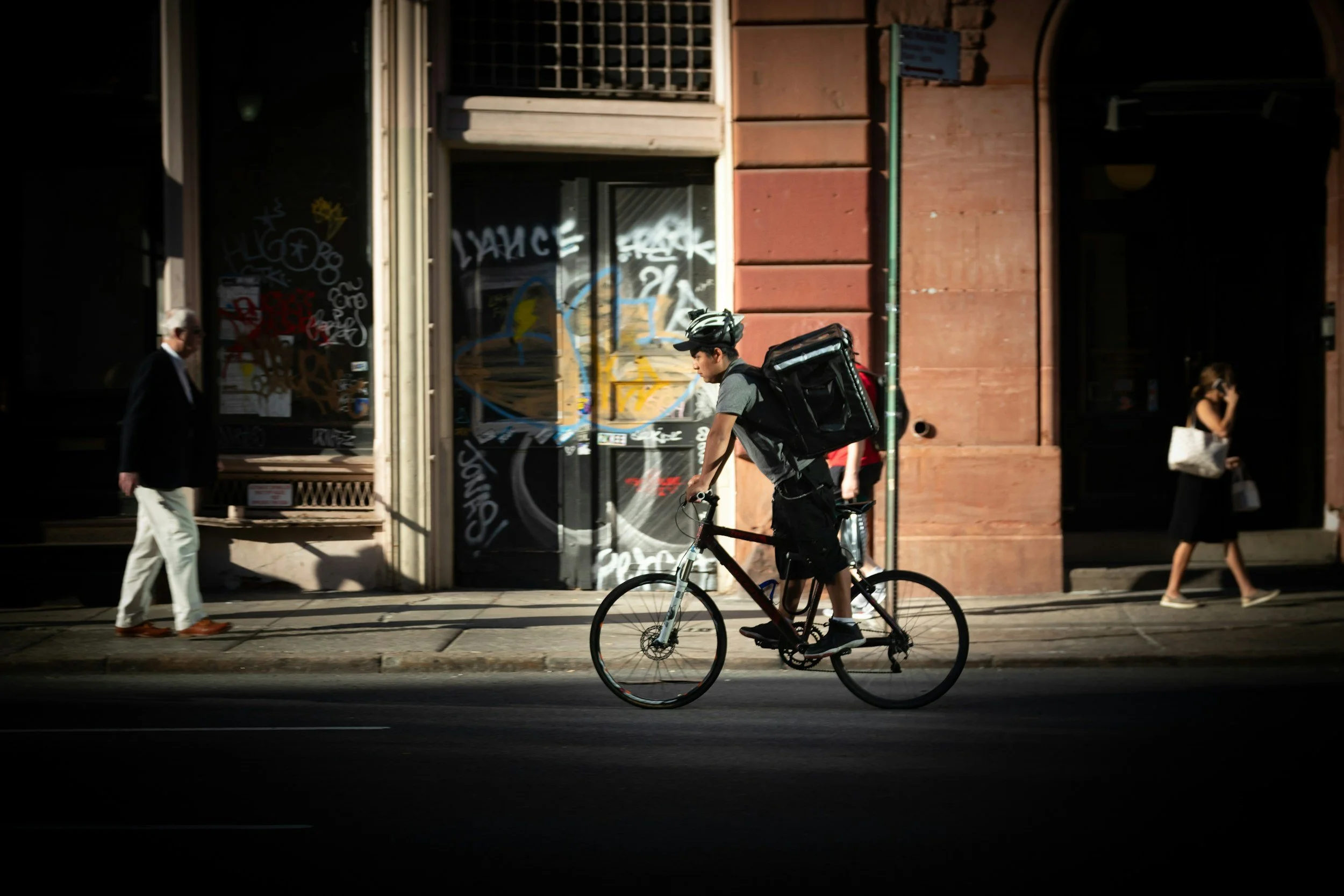
New York City’s 2021 legislation establishing minimum pay for app-based food delivery workers represents a significant recent effort to protect gig workers. This essay argues that the legislation is counterproductive: by raising pay without reclassifying workers as employees, it gave delivery platforms an incentive to extract more output per worker hour, shifting the cost of higher wages back onto workers in the form of greater strain and risk. Drawing on data reported by delivery platforms to the city under the 2021 legislation, the essay shows that between the second half of 2023 and the second half of 2024, deliveries per worker hour rose 75% while consumer spending per delivery stayed flat and platform gross profit per delivery fell only modestly, suggesting that workers absorbed the bulk of the mandate’s cost. The essay situates these findings within Richard Florida’s framework of the new urban crisis, arguing that Florida’s prescription of converting low-wage service jobs into family-supporting work cannot be achieved through wage protection alone when the underlying power asymmetry between platforms and workers remains intact. The New York case is not exceptional: platform companies have pursued analogous arrangements in California and other states, and a proposed 2026 federal rule would make independent contractor classification easier nationally. For this class of worker, the new urban crisis is not a failure of policy ambition, but a predictable feature of how platform labor markets distribute power.
Homelessness as America’s “New Urban Crisis”
By Yetimoni Kpeebi (UNC Charlotte)
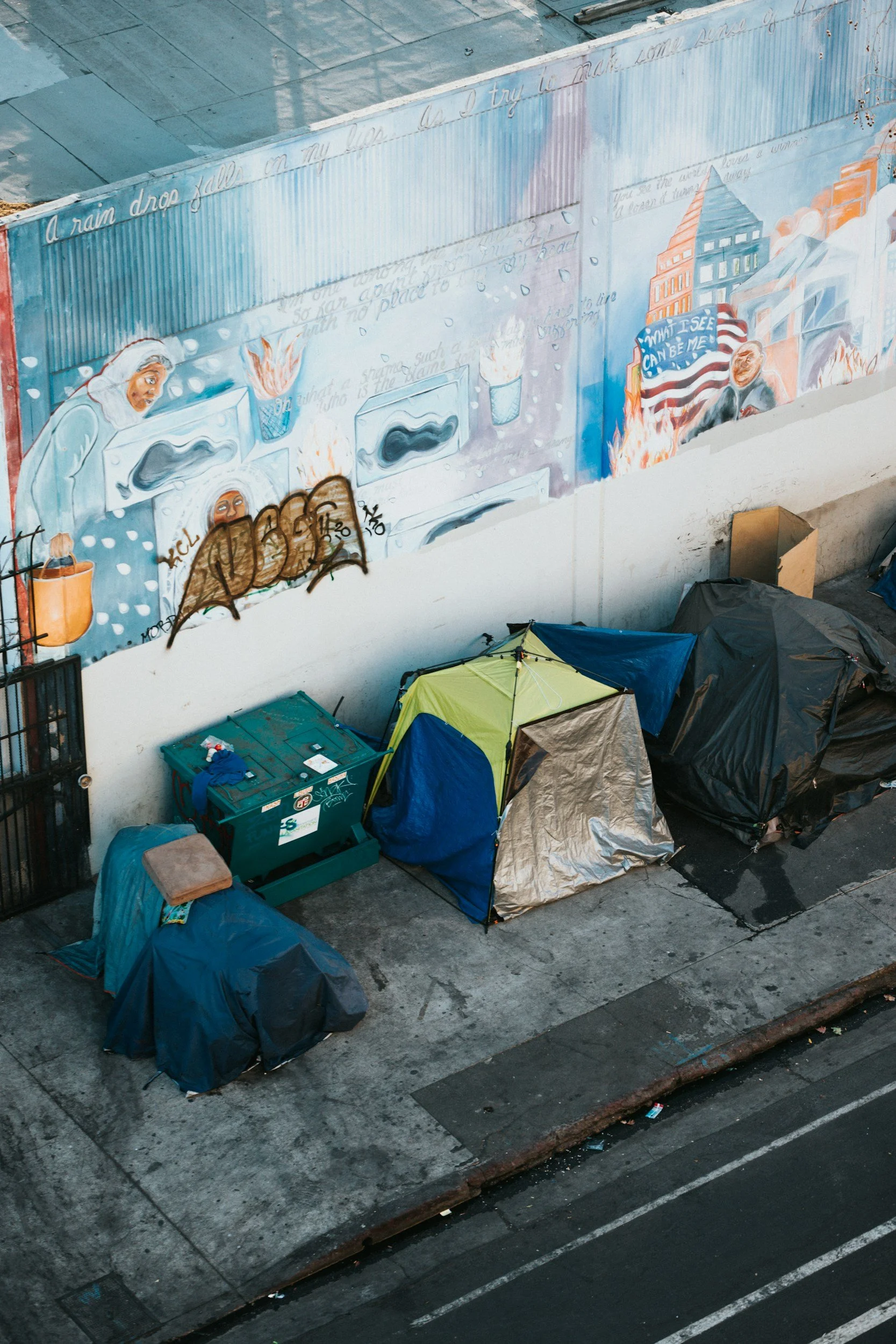
Homelessness in the United States has reached its highest recorded level in decades, yet governance responses remain overwhelmingly punitive. Drawing on critical urban theory, this essay frames homelessness as America's “new urban crisis.” By exploring the unprecedented scale of homelessness and the intensification of punitive governance, this essay shows that homelessness has shifted from a temporary social emergency to a normalized mode of urban governance in contemporary American cities. I conclude by arguing for a decisive shift away from punitive governance and toward housing-centered solutions grounded in the rights and dignity of the unhoused.