Beyond the First Draft: How U.S. Cities Are Updating Their Climate Action Plans and Where They Still Fall Short
Andrés Peñalosa Reyna (San Diego State University)
Hurricane Marie recently struck coastal California unexpectedly, catching many off guard. This kind of surprise is happening worldwide, whether through hurricanes, extreme heat waves, catastrophic flooding, or wildfires, impacting communities in ways they never have before. In response to these threats, cities across the United States have developed Climate Action Plans, official policy for reducing greenhouse gas emissions and adjusting to the effects of a changing climate.
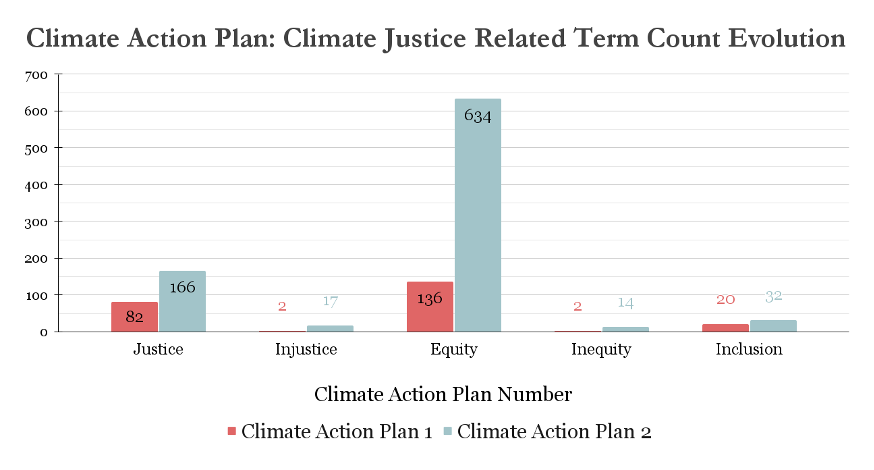
Between the first and second generations of Climate Action Plans, cities made meaningful strides by weaving climate equity and justice into their policies at nearly four times the previous rate and shifting toward more inclusive, diverse community engagement methods that go well beyond traditional town halls. However, significant gaps remain, as cities continue to prioritize reducing emissions over preparing for the climate impacts that are already here, and nearly a third of the plans studied still lack any clear strategy for monitoring progress and holding themselves accountable.
These plans also function as political instruments designed to convert climate goals into real world action, a process that often involves social and political debate, compromise, and conflict. Are these policy efforts themselves adapting over time? Our research explores this question by analyzing first and second generation Climate Action Plans across 11 major U.S. cities.
The results tell an encouraging story of progress. Austin renamed its second plan the "Climate Equity Plan," and Oakland used the word "equity" nearly 200 times in its updated version, a striking contrast to earlier plans that barely mentioned the term. Cities are also broadening how they engage the public, moving away from traditional town halls toward online forums, partnerships with local organizations, and more diverse community voices.
Yet the data also reveal important shortcomings. Cities like Los Angeles and Washington D.C. had no monitoring strategy in either of their plans, leaving residents with no clear way to know whether their city is keeping its climate promises. And across the board, plans still focus far more on reducing emissions than on preparing for the floods, heat waves, and wildfires that are already arriving.
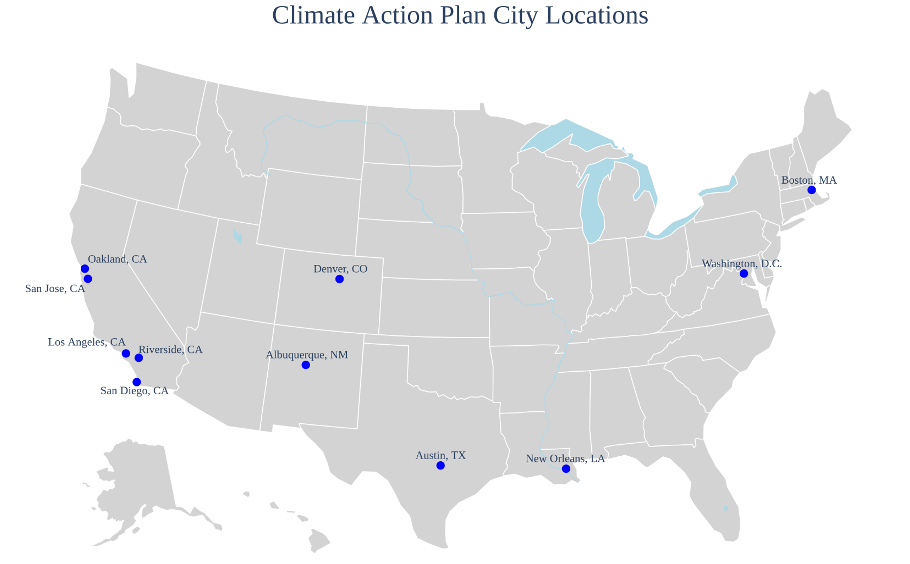
Our study focused on the climate action plans of eleven cities in the United States: Albuquerque, Austin, Boston, Denver, Los Angeles, New Orleans, Oakland, Riverside, San Diego, San Jose, and Washington D.C.
Our deeper dive into San Diego's planning process illustrates what more inclusive climate governance can look like in practice. The city convened a diverse review committee that brought together nonprofits, unions, universities, and utilities to shape its updated plan, demonstrating that climate action is increasingly a community endeavor rather than something decided behind closed doors.
These climate related events represent an ongoing and growing crisis, and our study helps open a much needed conversation about how the policies meant to address that crisis are evolving, and where they still fall short. Our research shows that an increasingly diverse group of people are becoming directly involved in drafting and evaluating the climate policies shaping their communities. We invite you to join that growing group. How will you help continue this important conversation?
References
Bery, S., & Haddad, M. A. (2023). Walking the Talk: Why Cities Adopt Ambitious Climate Action Plans. Urban Affairs Review, 59(5), 1385-1407. https://doi.org/10.1177/10780874221098951
Damsø, T., Kjær, T., & Christensen, T. B. (2016). Local climate action plans in climate change mitigation–examining the case of Denmark. Energ. Policy, 89, 74-83. https://doi.org/10.1016/j.enpol.2015.11.013
Diezmartínez, C. V., & Short Gianotti, A. G. (2022). US cities increasingly integrate justice into climate planning and create policy tools for climate justice. Nat. Commun., 13(1), 5763. https://doi.org/10.1038/s41467-022-33392-9
Ghoneem, M. Y. M. (2016). Planning for climate change, why does it matter? (from phenomenon to integrative action plan). Procedia-Social and Behavioral Sciences, 216, 675-688. https://doi.org/10.1016/j.sbspro.2015.12.060
Hughes, S. (2017). The Politics of Urban Climate Change Policy: Toward a Research Agenda: Toward a Research Agenda. Urban Affairs Review, 53(2), 362-380.
Shi, L. (2021). From Progressive Cities to Resilient Cities: Lessons from History for New Debates in Equitable Adaptation to Climate Change. Urban Affairs Review, 57(5), 1442-1479. https://doi.org/10.1177/1078087419910827