Kyle A. Jaros (University of Notre Dame)

Development zones (kaifaqu), or bounded spaces with special economic policy privileges and streamlined administrative arrangements, have figured centrally in China’s urban and economic transformation over the past five decades. The Shenzhen Special Economic Zone and dozens of smaller state-authorized development and trade zones led the way in economic reform and opening during the 1980s. The Pudong New Area and its imitators across the country piloted new models of land- and infrastructure-driven urbanization after the 1990s. High and New Technology Development Zones (HTDZs) and strategic industrial clusters established across major cities have played a starring role in China’s accelerating 21st century push for industrial upgrading and technological innovation. Development zones are where national policy visions such as Made in China 2025 have been translated into on-the-ground action.
While there is no doubt as to the economic importance of Chinese development zones, experts on Chinese cities have disagreed sharply about zones’ implications for urban governance. Some, like Aihwa Ong (2004) have viewed development zones as enclaves of neoliberal deregulation that have given rise to “variegated sovereignty.” Others, such as Carolyn Cartier (2017) have seen zones in almost polar-opposite terms as places of especially intensive party-state intervention and integration in the spatial economy. Such wide divergence in how scholars think about Chinese development zones reflects a deep paradox in zone governance: while the addition to China’s urban administrative system of new entities such as zones tends to fragment state authority, the concentration of authority in specially appointed zone leaders also creates new opportunities for integration across different sectors and scales of development.
So, which is it? Are development zones vehicles for more integrated and effective governance in Chinese cities? Or do they represent a further layer of administrative fragmentation in major Chinese cities that already suffer from frictions between different levels of government, local jurisdictions, and functional bureaucracies?
The short answer, I argue in my new article, “Reintegrating China’s Development Zones: Leadership Linkages and Administrative Logics,” is that development zones in contemporary China display multiple administrative logics: in different settings they integrate and fragment urban governance authority in different ways. It is important to consider both how the leadership bodies of development zones relate to the municipal governments above them and the sub-municipal urban districts, counties, and other zones whose territory they abut or overlay.
I offer a new typology for conceptualizing the logics of zone administration in China. Through their leadership appointments and administrative structures, zone authorities can be more or less tightly linked to municipal governments above and/or to the other local administrative units or zones surrounding them. As shown in Figure 1, below, we can imagine four different administrative logics served by zones: they may function as administrative enclaves when zone authorities have limited integration with municipal governments and with neighboring local units. This resembles the concept of zone governance described by Ong (2004). On the other extreme, closer to Cartier’s (2017) account, zones may function as administrative nexuses that use the connective tissue of the party-state to link to both municipal authorities above and with local jurisdictions around them and thereby enhance coordination of economic and urban development functions. Mixed relationships are also possible. When well connected to municipal governments but weakly connected to subunits and other zones, zones may function as intergovernmental platforms that make it easier for municipal governments to project their development visions onto specific patches of territory, but at the cost of limited coordination with adjacent areas. Or, zones whose leaders have tight connections to neighboring urban districts or zones but lack close links with municipal governments they may function as interlocal platforms that facilitate local coordination but are less responsive to municipal authorities above.
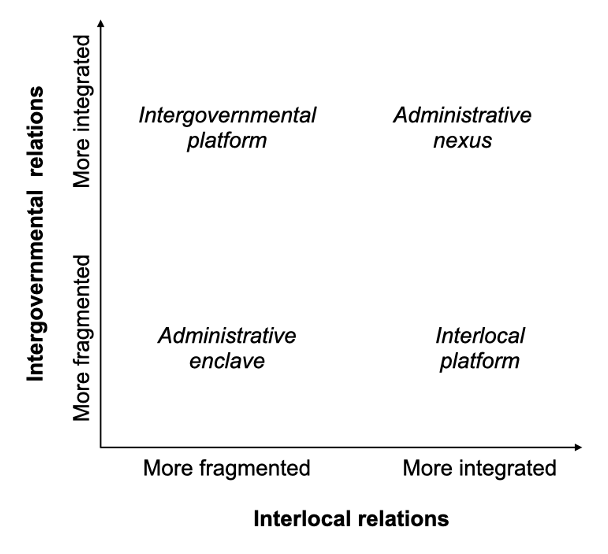
Figure 1: Rethinking the administrative logic of development zones
Which of these categories, if any, best matches the reality of zone administration in China? Providing a definitive answer to this question is hard, because many aspects of zone governance in China—from institutional structures to financial arrangements—are not very transparent and because collecting reliable and comparable data is tricky. However, I develop a preliminary answer by scrutinizing patterns of leadership appointments in China’s development zones, building on a long tradition of Chinese politics scholarship, such as work by Landry (2008) and Leutert (2018), that uses leadership appointments to gain insight into authority relations within the otherwise opaque Chinese party-state.
Because top zone leaders—typically their Communist Party working group secretaries and management committee directors—exercise great sway over zone affairs, it is instructive to look at the types of prior experience they bring and the kinds of concurrent appointments they hold. Some zone leaders simultaneously serve in high-level municipal government roles or have previously served in municipal government positions; these experiences presumably give them stronger personal and professional affinities at that level. In other cases, zone leaders simultaneously serve (or have previously served) in urban district leadership posts or in other nearby zones. In other cases still, zone leaders may have risen from within the same zone or have entered zone leadership from backgrounds in industry or other sectors. By treating zone leaders’ career connections to different governmental units—the municipal government above, neighboring urban districts or other zones, etc.—as a proxy for their inclination and ability to coordinate closely with other municipal party-state actors, I glean insights into how zones fit into the larger administrative workings of Chinese cities.
With this goal of using zones’ leadership linkages to assess their administrative logics in mind, I assembled what is to my knowledge a first-of-its-kind biographical dataset of Chinese zone leaders with help from a team of research assistants. While only some Chinese city yearbooks reliably provide information on zone leader appointments, I was able to collect leader names and appointment data for major development zones as well as urban districts and counties in the five cities of Changchun, Hangzhou, Nanjing, Ningbo, and Xi’an. In total, I gathered data for 593 unique postings between 2007-2017—or appointments of a given individual to a given post—representing 29 zones and 61 administrative subunits. I then examined how concurrent and prior appointments differ for zone versus subunit leaders and for zone leaders in different cities.
The first key finding that emerged from this analysis is that, at least based on their leadership appointments, zones do not simply resemble administrative enclaves. Indeed, when I compare the concurrent appointments and prior postings of zone leaders with those of their counterparts in charge of urban districts and counties, I find that zone leaders tend to be more closely linked both to municipal governments above and to other sub-municipal jurisdictions. Whereas 69 percent of zone leader postings in my sample have concurrent postings in urban districts, counties, or other zones, only 22 percent of district/county leaders have such concurrent appointments. And, while 23 percent of zone leaders are simultaneously appointed to municipal government posts, only 8 percent of district/county leaders are. Zone leaders are, as a group, well-connected, not insular.
However, a second key finding is that zone leadership linkages—and the administrative logics they support—vary widely across settings. Even within cities, zone leaders’ appointment patterns vary over time or across different development zones. However, it is when I compare across different cities that I find particularly striking differences in zone leadership appointment patterns. For example, whereas a whopping 82 percent of zone leaders in Nanjing have concurrent appointments in urban districts and counties, only 9 percent of zone leaders in Xi’an do. By contrast, far more zone leader appointments in Xi’an (39 percent) involve concurrent appointments in municipal leadership posts than those in Nanjing (8 percent).
Although further research is needed to assess whether similar variation is common across major Chinese cities more broadly, my preliminary analysis demonstrates that zone leadership appointment patterns show considerable linkages to other parts of the municipal party-state but also vary considerably across cities. While patterns in Nanjing are consistent with an interlocal logic and patterns in Xi’an are more consistent with an intergovernmental platform logic, however, evidence for the administrative nexus model is more elusive. This raises the possibility that—even as zones become increasingly integrated with the larger municipal systems in which they are based—it remains difficult to overcome certain tradeoffs in the structuring of authority. Thus, even as urban governance integration proceeds apace in China, certain forms of fragmentation may be here to stay.
Works Cited
Carolyn Cartier. 2017. “Zone Analog: The State-Market Problematic and Territorial Economies in China.” Critical Sociology, 44 (3): 1–16.
Pierre F. Landry. 2008. Decentralized Authoritarianism in China : The Communist Party’s Control of Local Elites in the Post-Mao Era. New York: Cambridge University Press.
Wendy Leutert. 2018. “The Political Mobility of China’s Central State-Owned Enterprise Leaders.” The China Quarterly, 233: 1–21.
Aihwa Ong. 2004. “The Chinese Axis: Zoning Technologies and Variegated Sovereignty.” Journal of East Asian Studies, 4 (1): 69-96.
Kyle A. Jaros is associate professor of global affairs at the University of Notre Dame. Jaros's work examines the politics of urban and regional development, intergovernmental relations, and subnational foreign affairs with a focus on China. He is the author of China's Urban Champions: The Politics of Spatial Development (Princeton University Press, 2019). Jaros holds a Ph.D. in Political Science from Harvard University and an A.B. in Public and International Affairs from Princeton University.